The Black Ernz has been cutting into Müllerthal sandstone for ten thousand years. The gorge runs north-east from Müllerthal village through twelve kilometres of close-sided rock, beech, and oak, until the river reaches Beaufort and the valley opens. In summer the canopy closes completely over the gorge. From altitude, the valley reads as an unbroken dark green — the rock formations that give the region its name are invisible, sealed under forty metres of leaf. Müllerthal does not give itself to altitude.
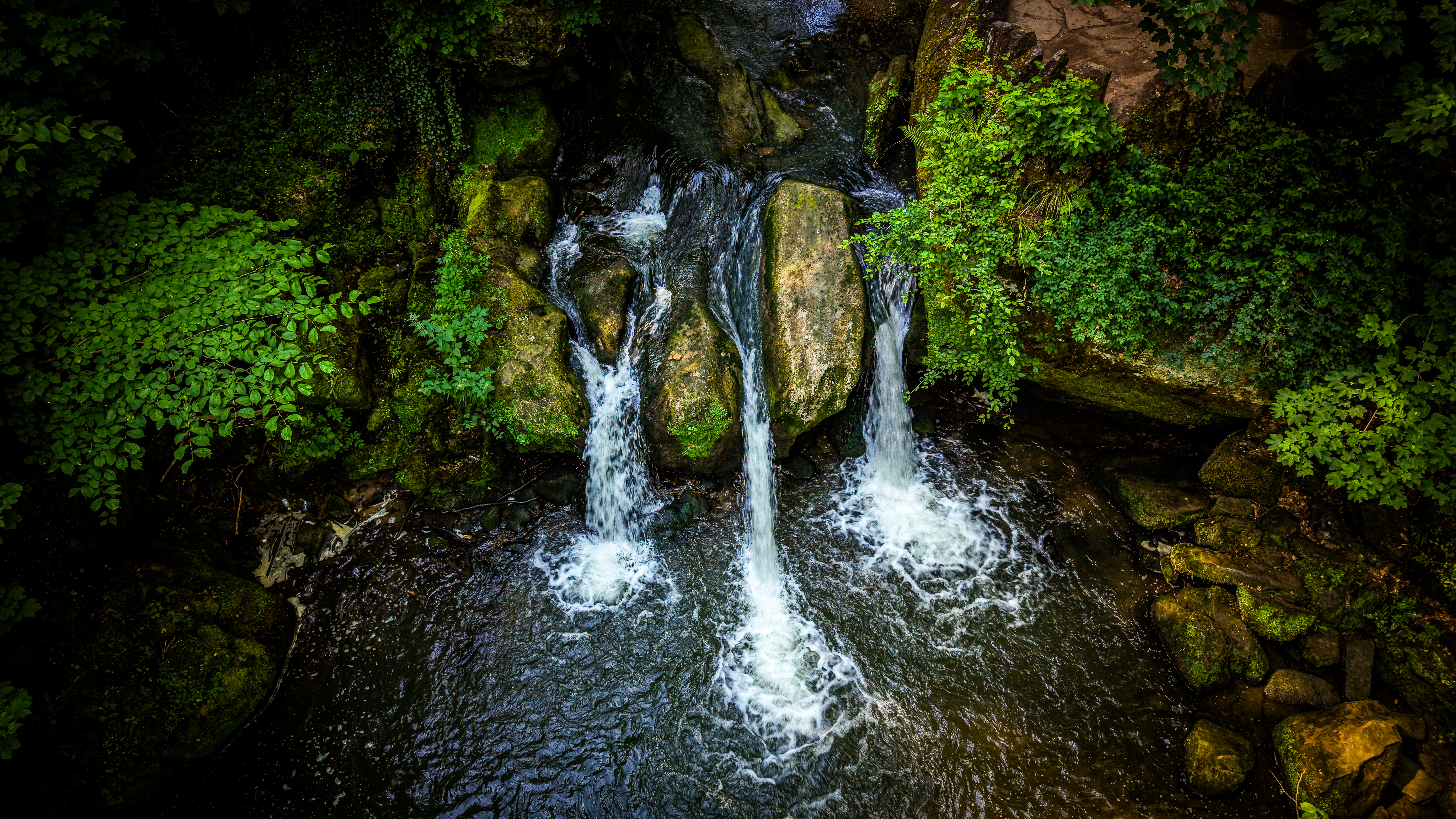
Three channels of white water at the gorge step — the Black Ernz divides over the sandstone lip and hits the dark pool below in parallel. From the ground this is the famous shot. From low altitude directly above, it is a diagram of the same force in three places at once.
PrintWhat the forest does give is light. It filters it, bends it, strips it into shafts. The Black Ernz runs shallow in June — clear water over ancient sandstone, gold in the shallows, blue-black in the deep channels. The rocks are old enough to have developed distinct characters: the smooth ones where the current runs fast, the rough ones where it pools and lets moss take hold. A near-nadir shot of the Black Ernz from low altitude reads like a relief map drawn in water and stone — two textures of the same river, separated by depth.
There is a stone bridge where the walkers' trail crosses the gorge. Built from the same sandstone as the cliffs it spans, moss in every joint, constructed for a century that moved more slowly. From the ground it frames the water below it. From twenty metres directly above it, the relationship inverts: the bridge becomes the subject, the water its context, the arch a perfect geometric answer to the problem of crossing. That view — the one the walkers below cannot have — is the one the drone found.
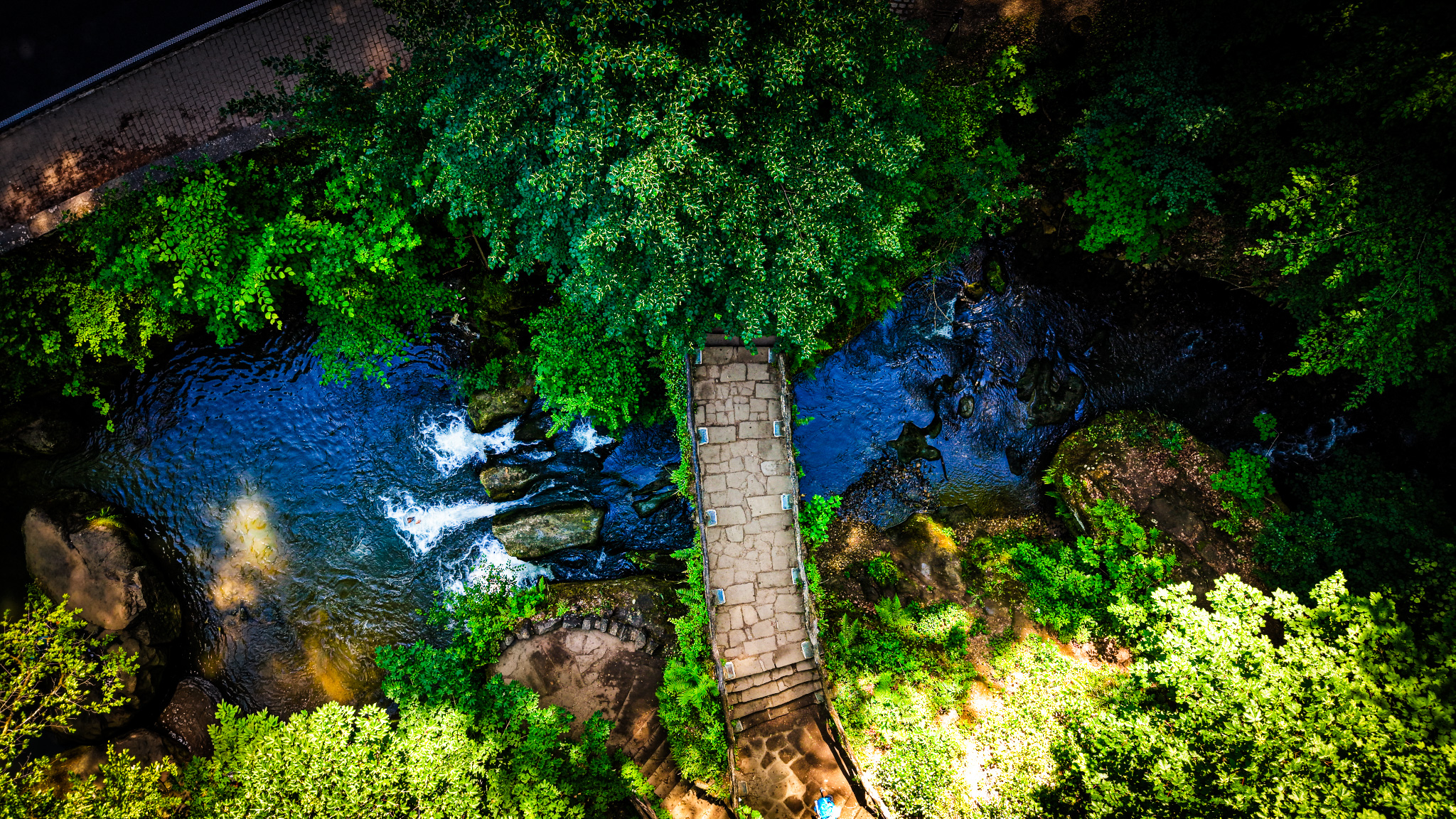
The ancient stone bridge from directly above. From the ground the bridge frames the water. From twenty metres up the relationship inverts — the arch becomes a geometric subject, the blue water its setting. The walkers below cannot have this view.
Print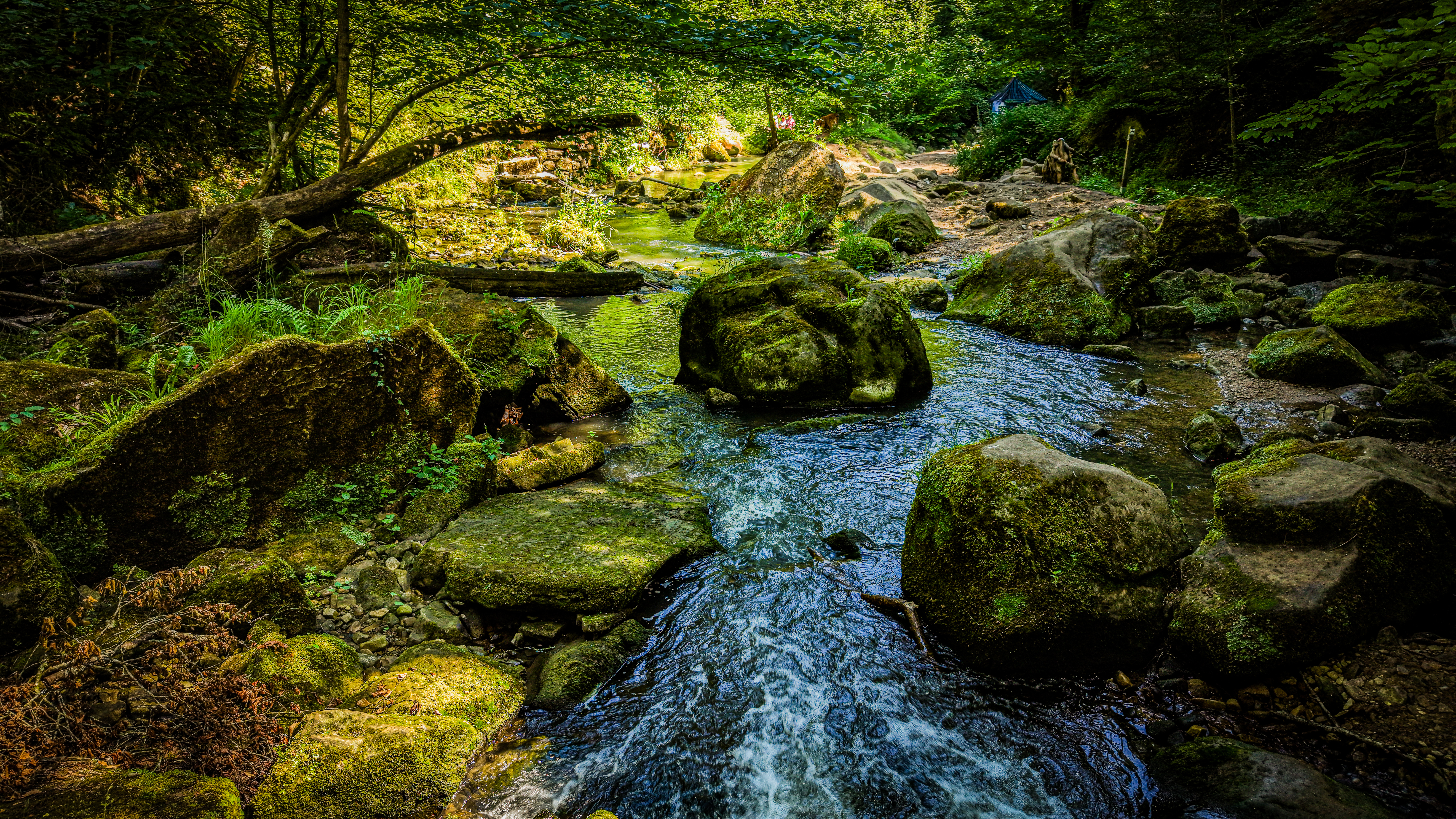
The Black Ernz at gorge level — large moss-covered sandstone boulders, the current threading between them. This is what the canopy hides from above. The drone cannot reach here. The walker can.
The waterfall at the gorge's heart is where the river meets a sandstone step and divides. Three channels of white water hit the dark pool below simultaneously. From ground level it is the photograph everyone takes — a postcard composition, famous enough to have its own name. From directly above at low altitude it becomes something else: three forces operating in parallel, the same source, the same destination, three different paths through the same rock. The forest closes in on all sides and the frame is green and black and white.
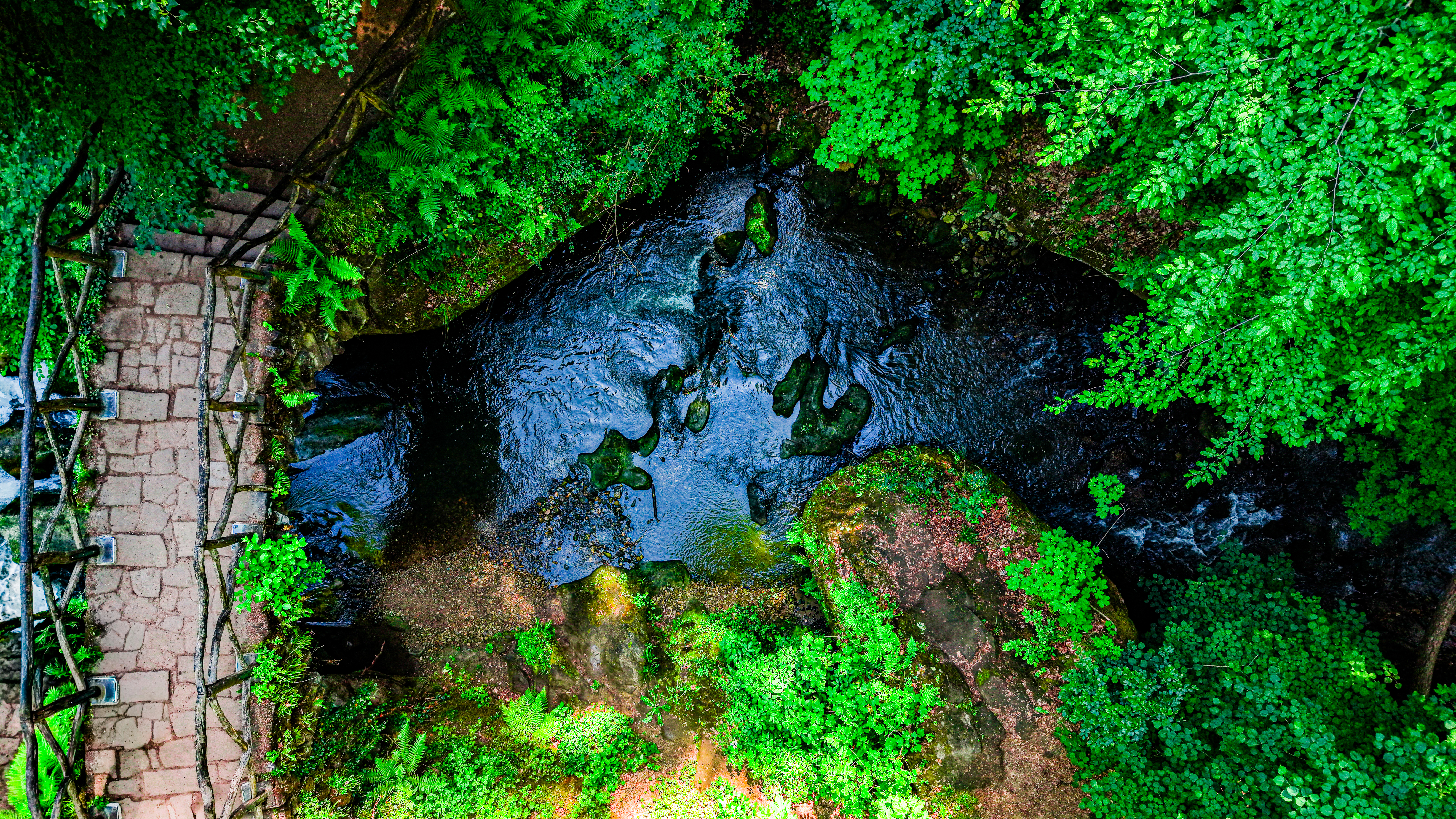
The old bridge and the Black Ernz from low altitude — stone arch, dark water, and the canopy pressing in on both sides. The gorge keeps the light off the water for most of the day; this shot required the gap when it briefly reached the bridge.
Print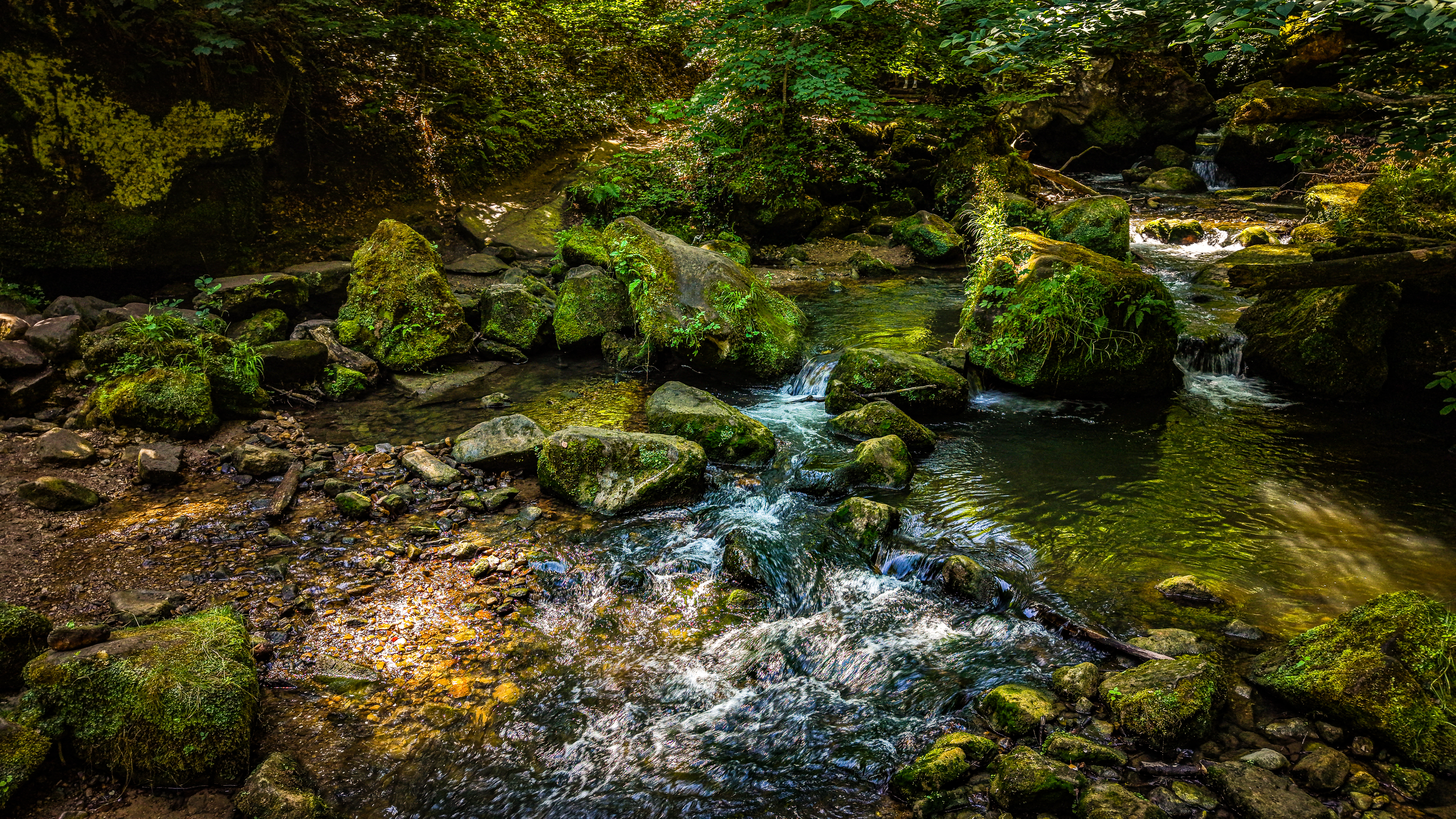
Multi-tier cascades over moss-covered sandstone — the Black Ernz stepping down through the gorge. The rock face has been polished and undercut over millennia; the moss establishes itself wherever the current slows enough to let it.
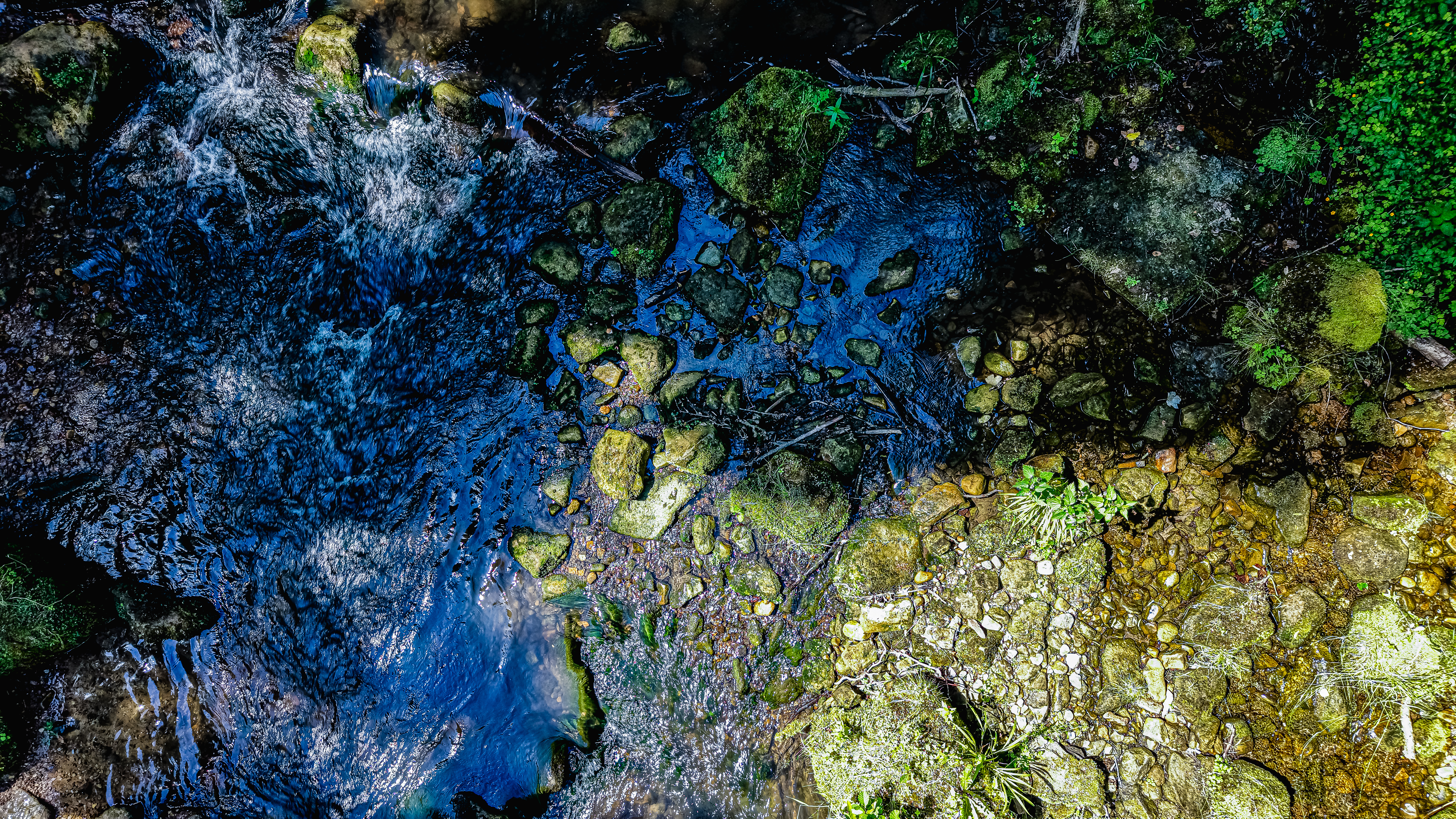
Streambed from directly above — the precise line where shallow amber water gives way to deep blue-black channel. The same river, two depths, two colors. At this altitude the Black Ernz reads as an abstract.
Print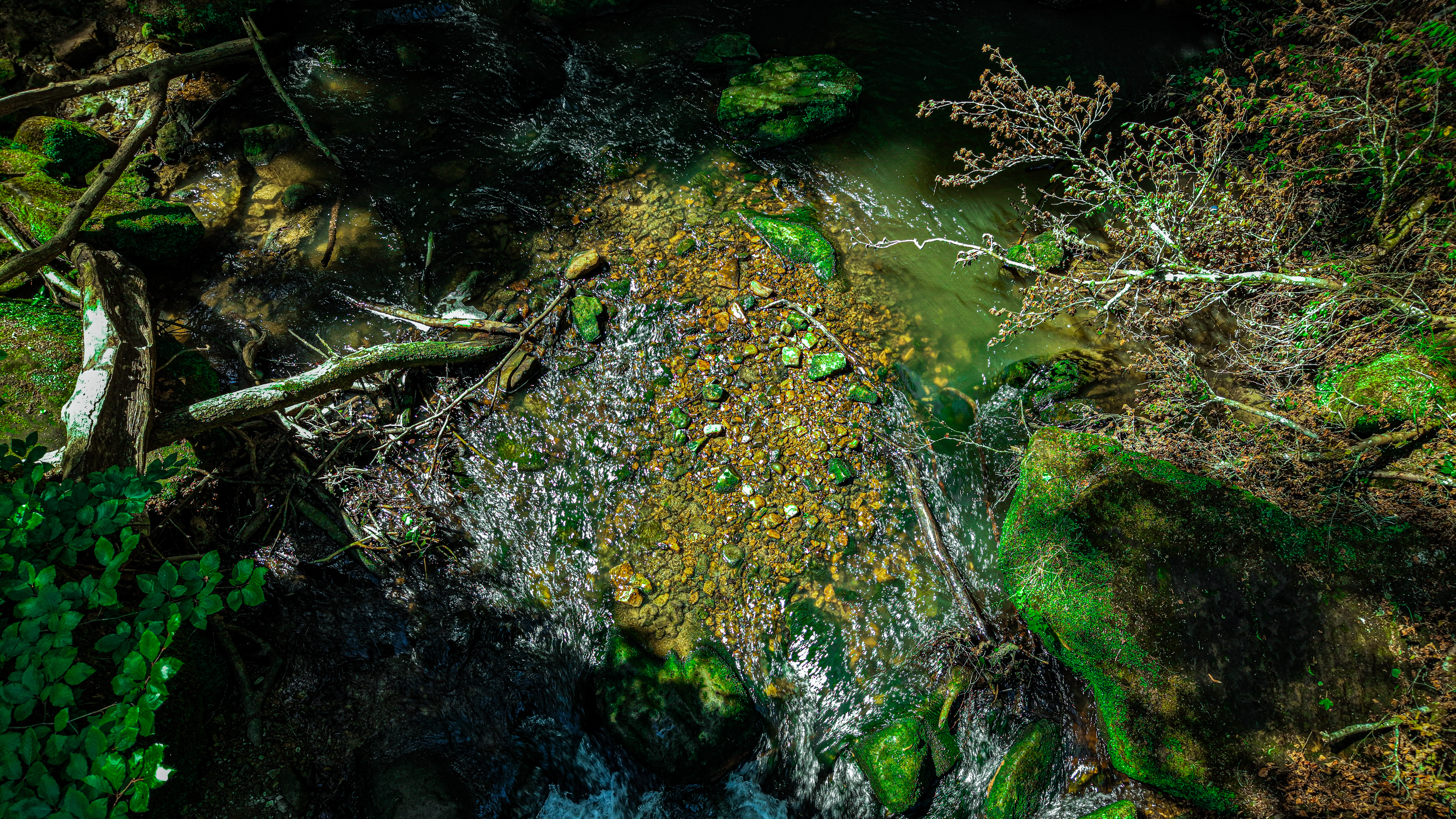
The Black Ernz in dappled afternoon light — fallen timber, golden pebbles, the current running amber in the shallows. The gorge filters the light before it reaches the water; by mid-afternoon the whole riverbed is the color of old honey.
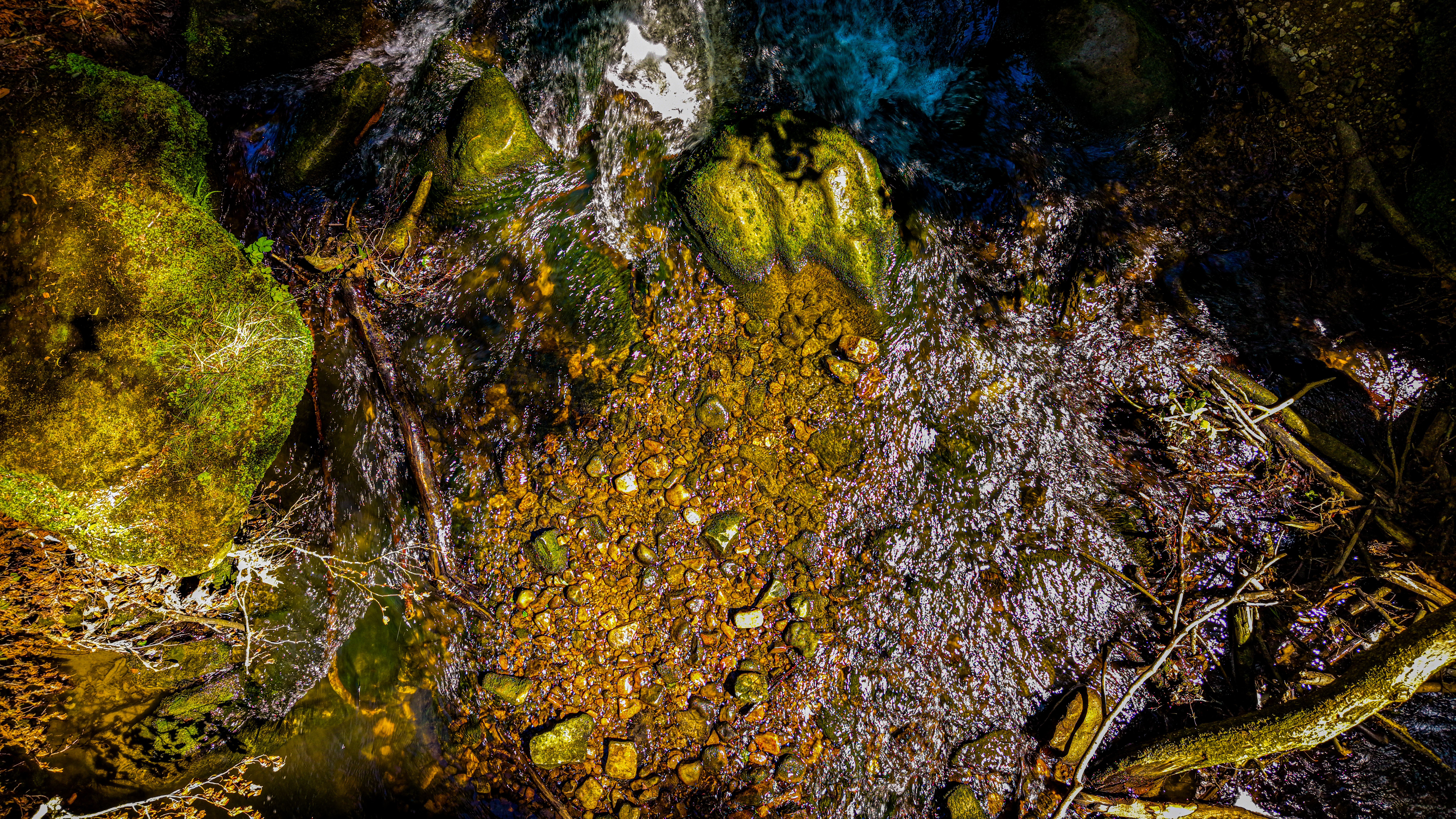
Streambed at very low altitude — pebbles, moss, a fallen branch, the current reading as a dark line through the stone. The Black Ernz has been sorting these rocks by size and weight for ten thousand years. From here it looks like a hand-drawn map.
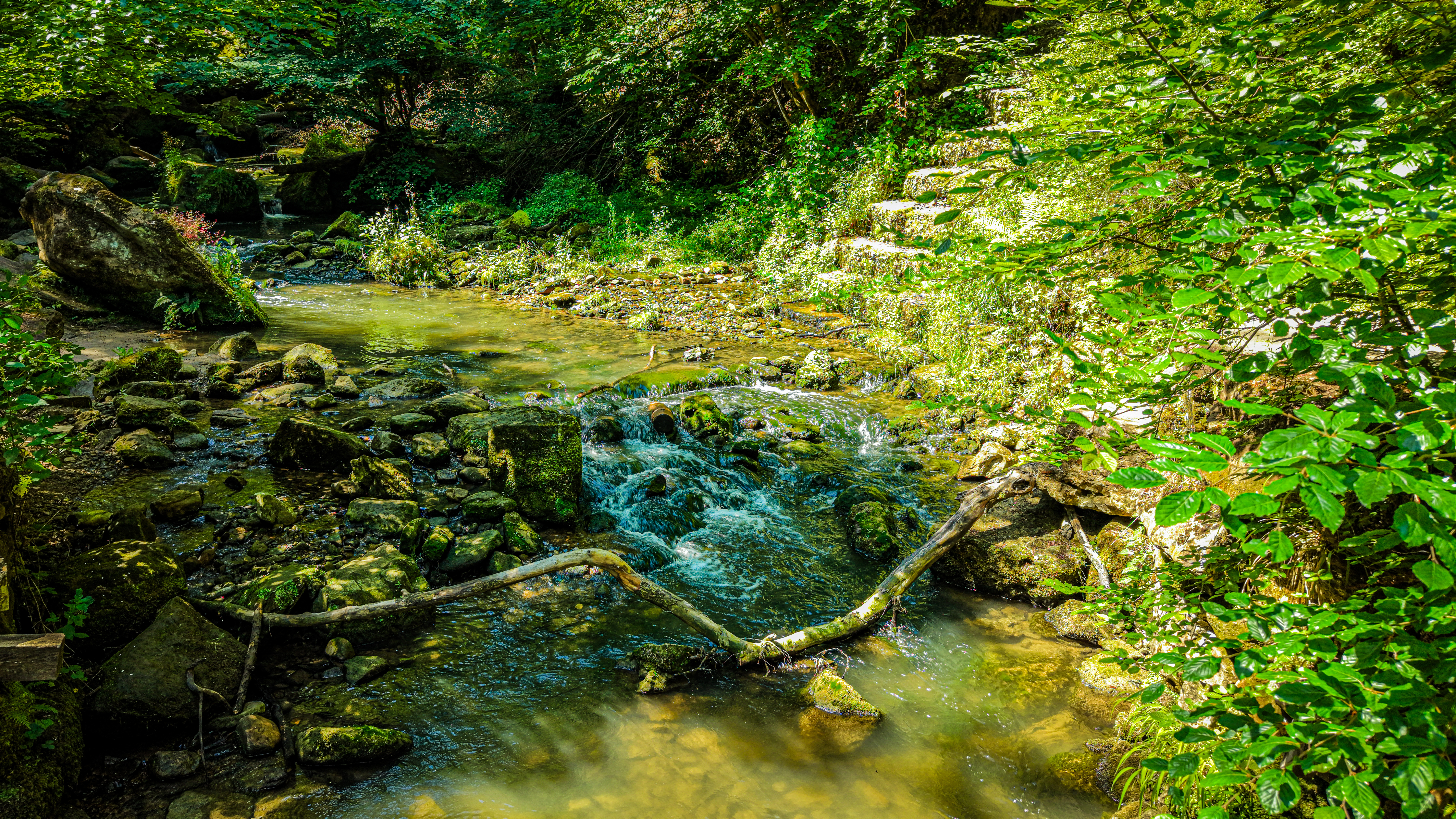
The Black Ernz in summer low water — clear over stone, the tree cover overhead cutting the light to a single shaft across the surface. The water has the quality of glass; the rocks below it are visible at depth.
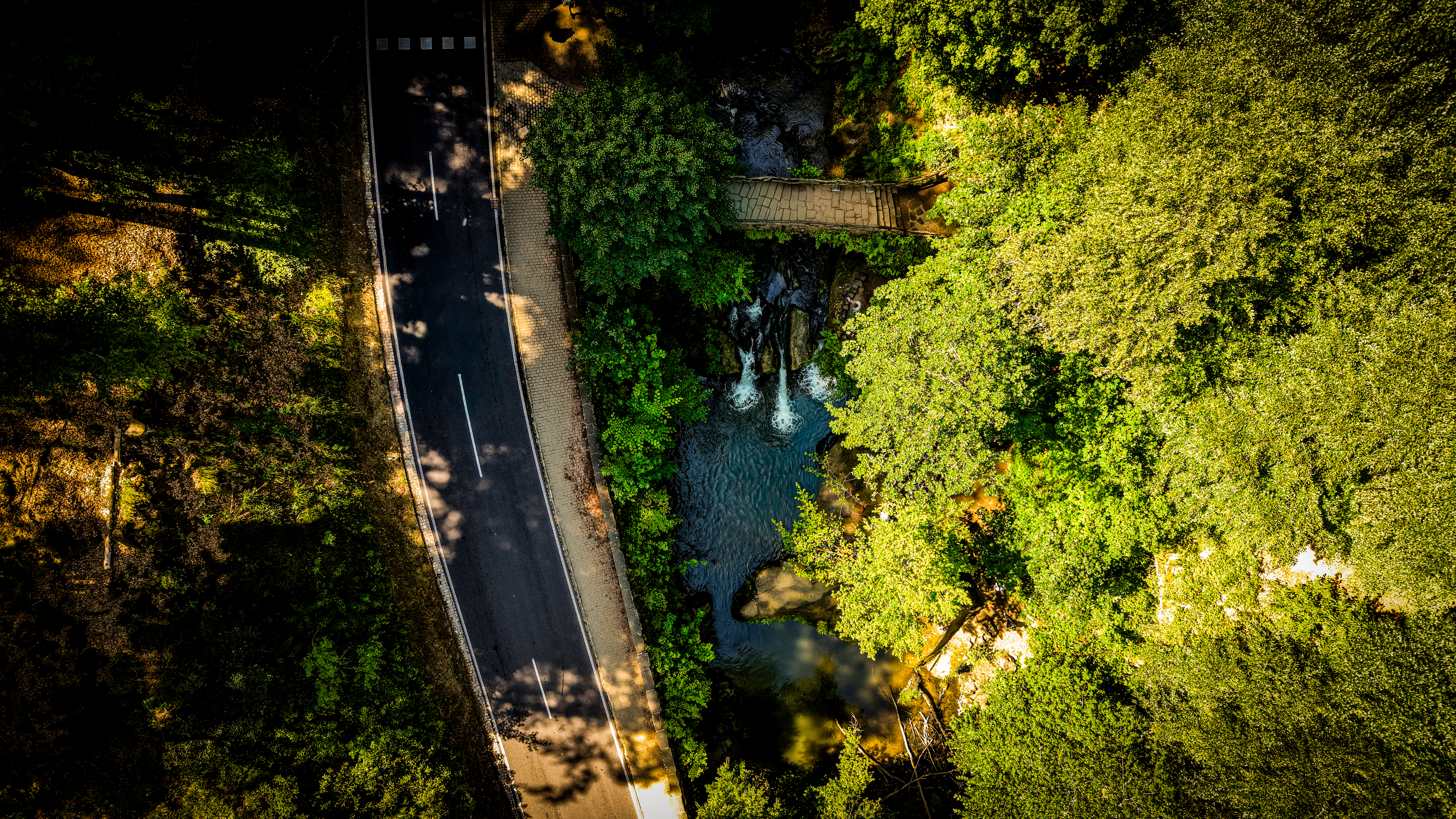
The gorge road from near-nadir — tarmac running straight through the tree canopy, the Black Ernz and its waterfall visible as a break in the green just beside it. The road and the river have been parallel here since the mills were working.
Print