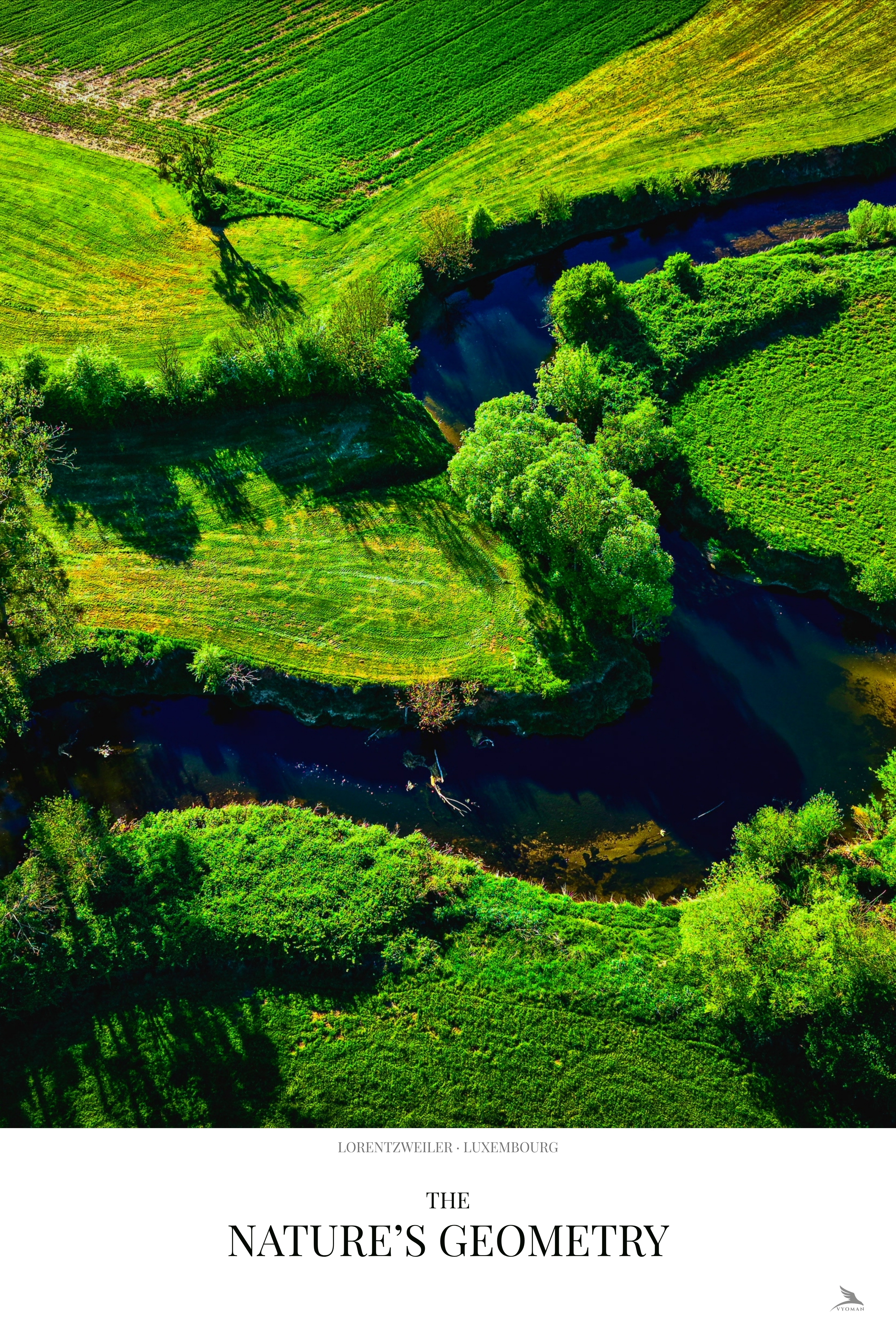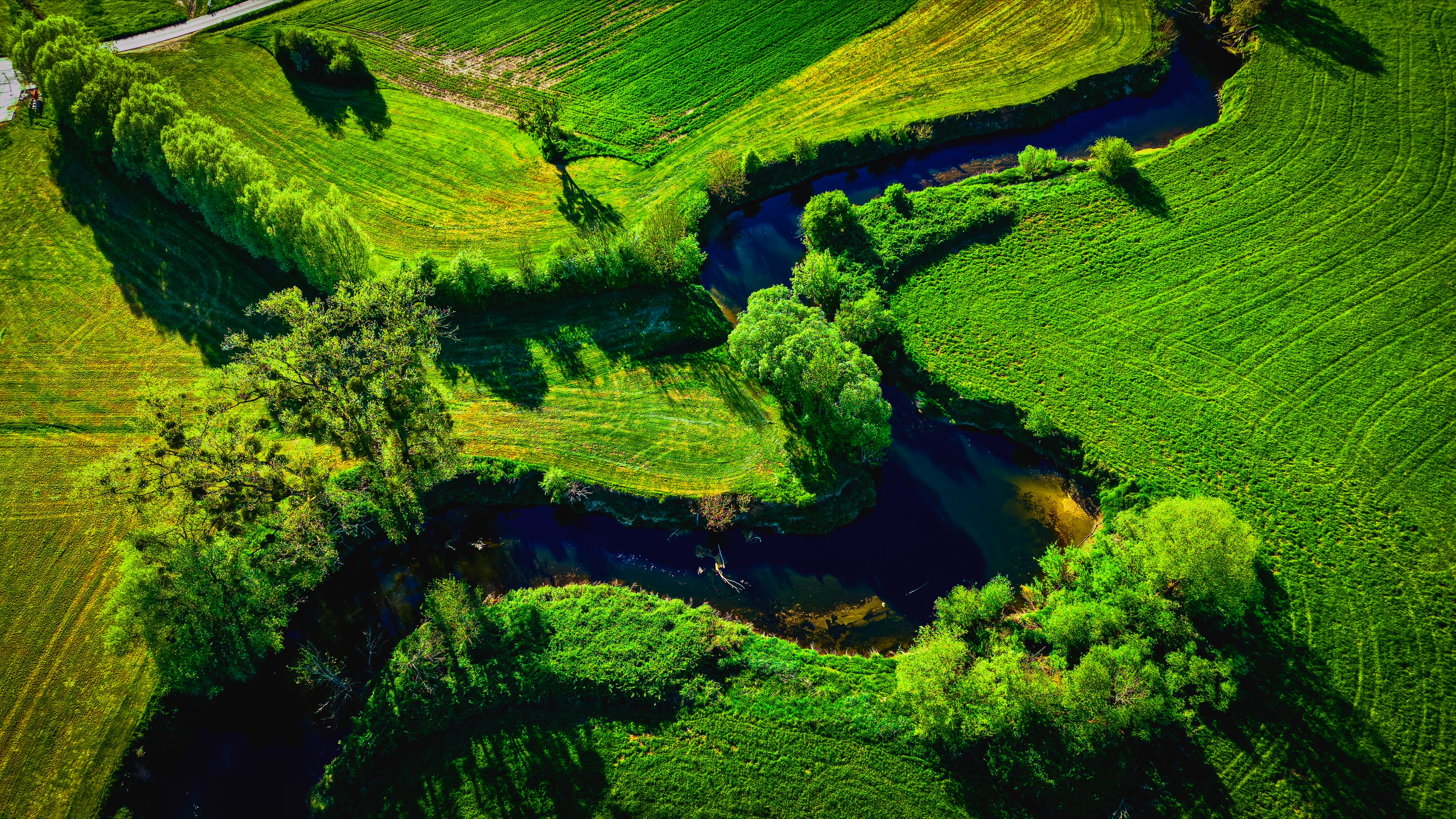
The Alzette rises in northern France and runs north through Luxembourg for a hundred kilometres before joining the Sûre near Ettelbrück. At Lorentzweiler it is a modest river — twelve metres wide, moving slowly through farmland the valley has held for a thousand years. The spring flood has passed. The meanders are the same shape they were drawn into this landscape ten thousand years ago. From above, the river and the fields together form a geometry that the road and the village can interrupt but not redirect.
The Alzette from directly above. The river has been tracing this meander for thousands of years. The road bridge is recent. The geometry is ancient.
PrintThese fields are under pressure. Luxembourg has lost more than twelve per cent of its arable land since 1990 as housing, infrastructure, and logistics zones expand outward from the capital. The Alzette corridor — fifteen minutes north of Luxembourg City by car — is the current front. The patchwork of crops, hedgerows, and drainage ditches visible from altitude in these frames is the same land that is subject to active development planning. It looks permanent from above. It is not.
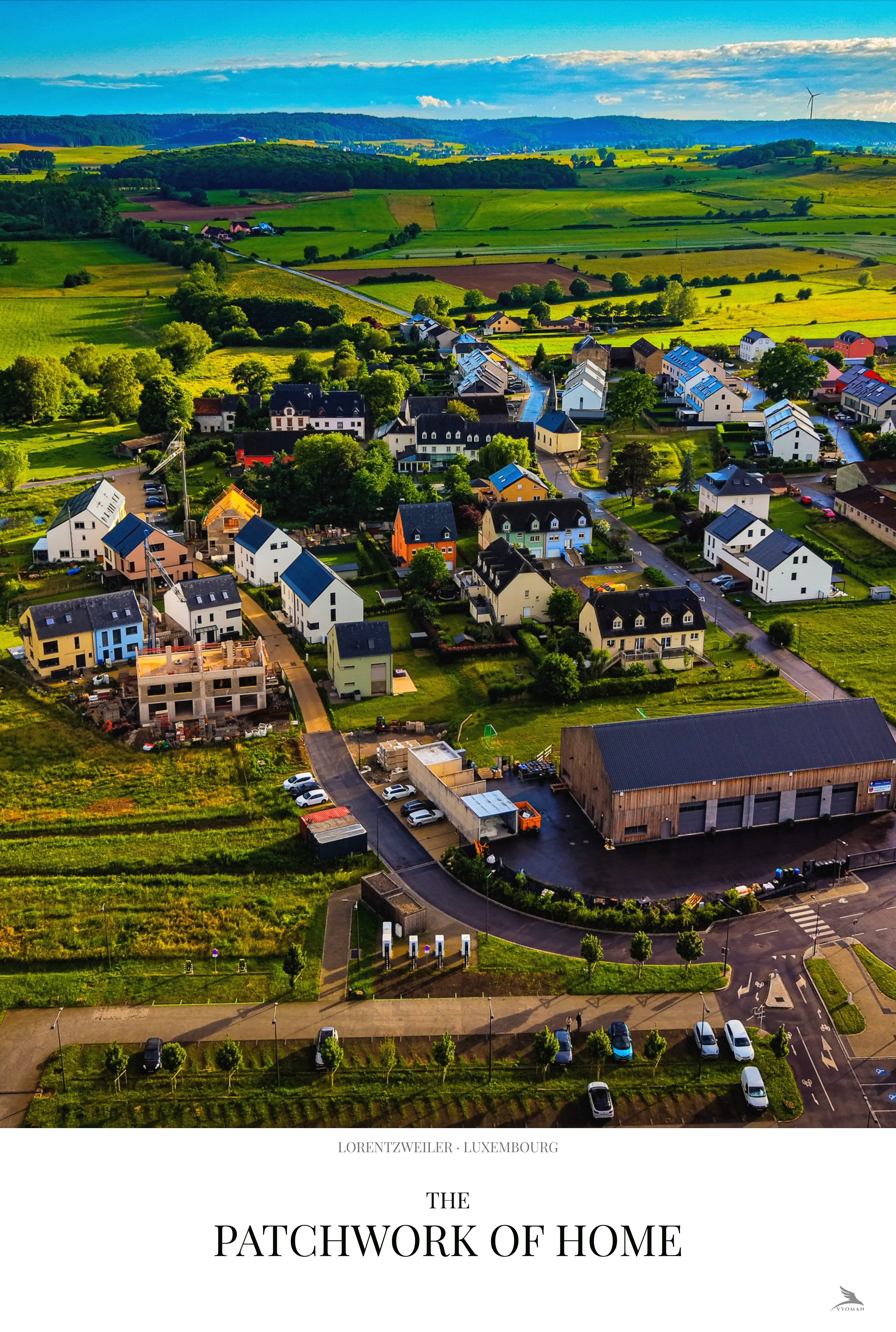
The church tower at the center of each village has oriented these settlements for eight hundred years. From the field, the tower tells you where you are. From the air, it does the same service in reverse — it makes the scale of the village legible against the surrounding farmland. Without it, the buildings dissolve into the texture of the landscape.
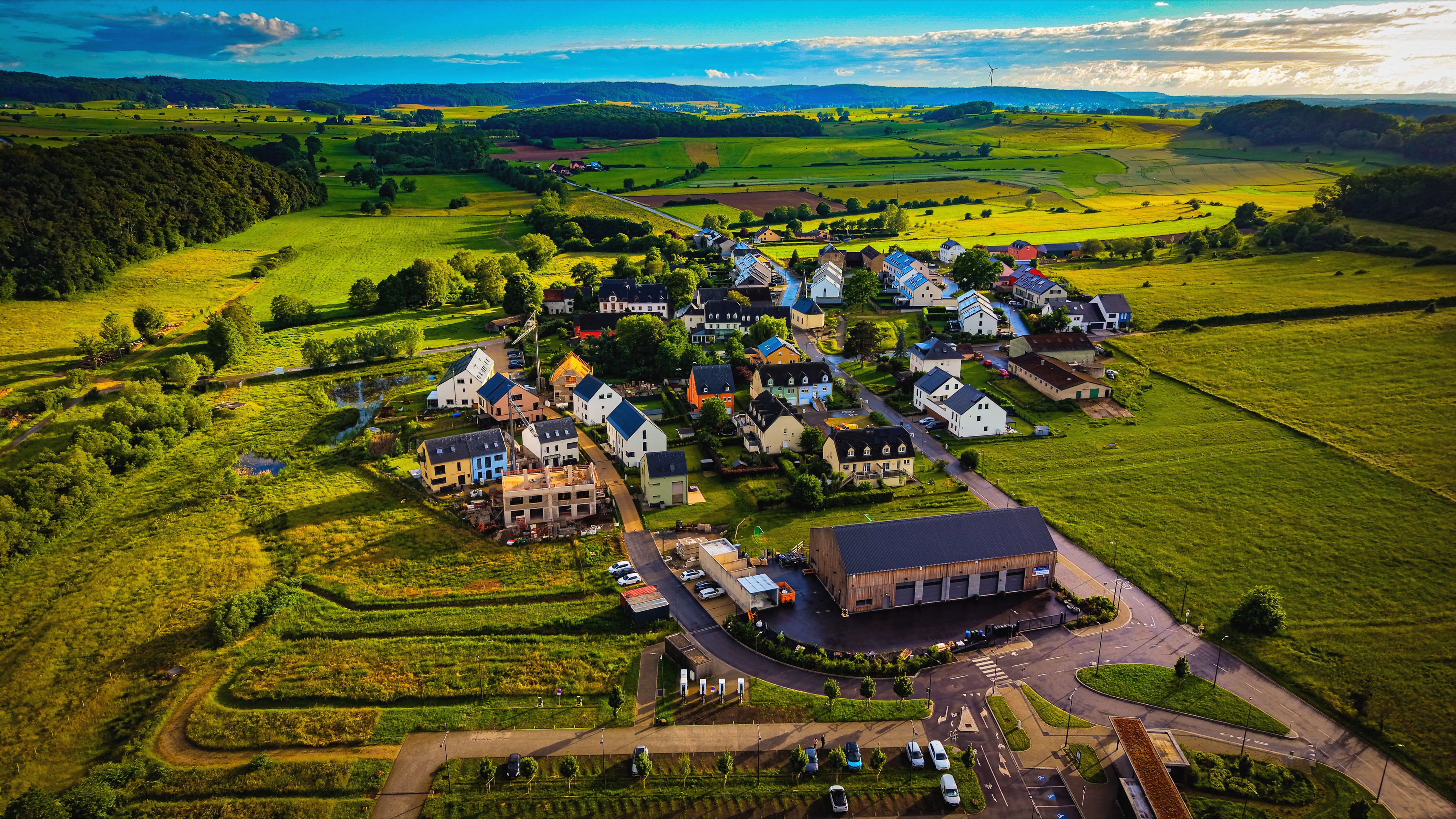
A Luxembourg village in the first week of April. The fields are in their spring colors. The church tower still orients the settlement the same way it has for eight hundred years.
Print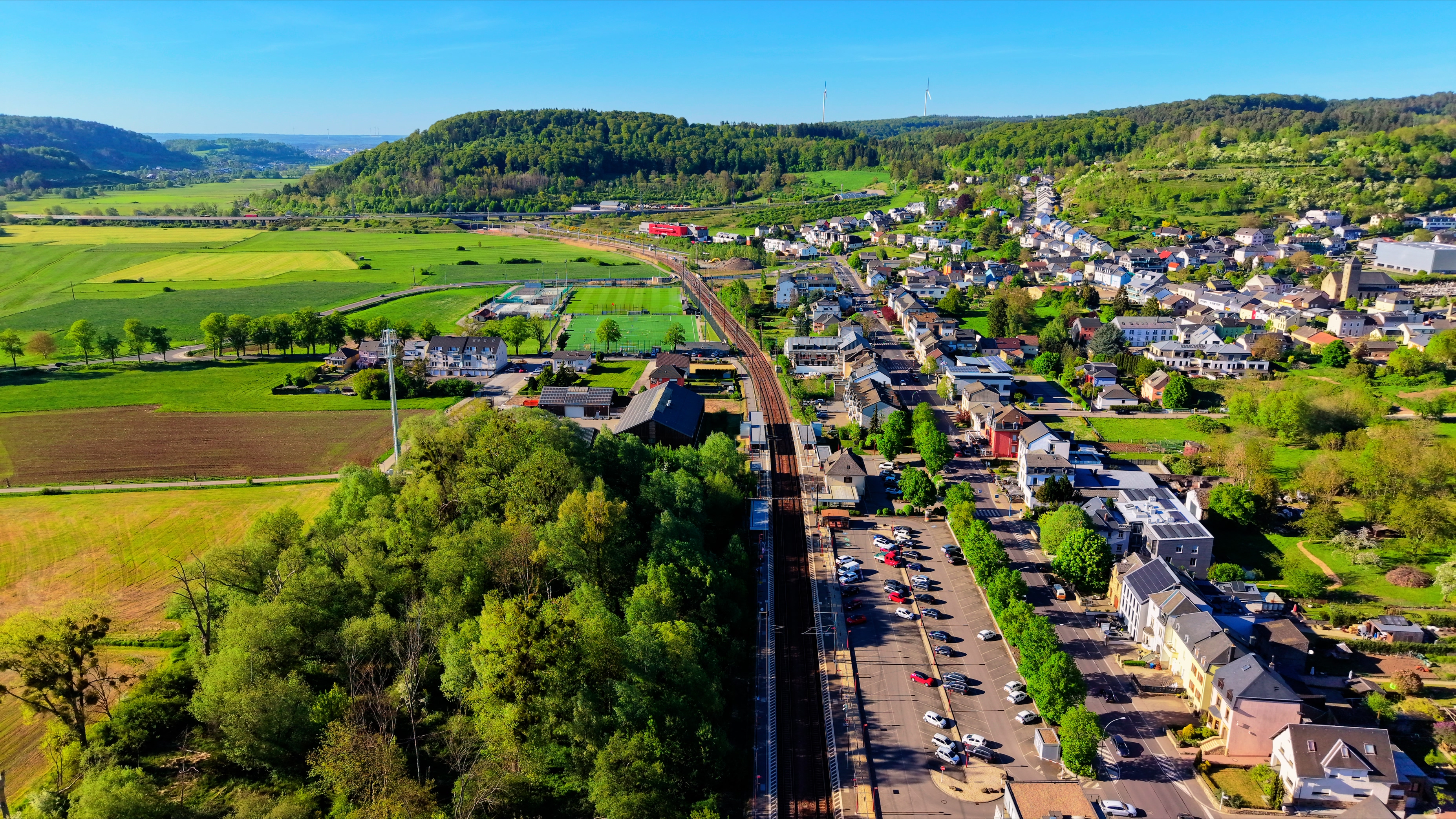
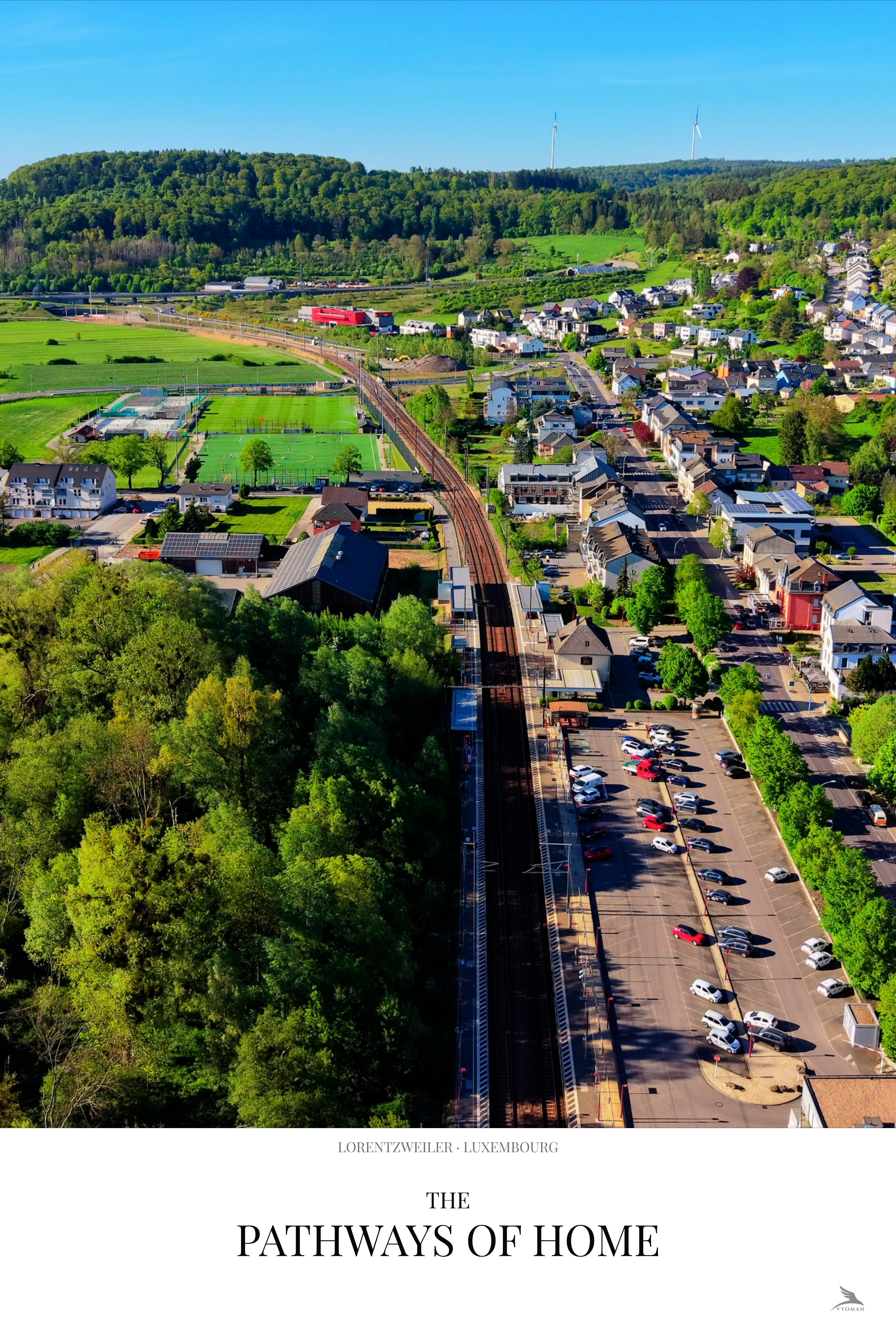
Walferdange from altitude. Railway line, town, fields, valley, hills — the full cross-section of a Luxembourg commune in a single frame.
PrintIn the first week of April the deciduous trees are not yet out. The fields show the winter crop — a faint green in turned earth — and nothing else. It is the least dramatic season to fly. It is also the most honest. The land shows exactly what it is made of when nothing is hiding it.
From the collection