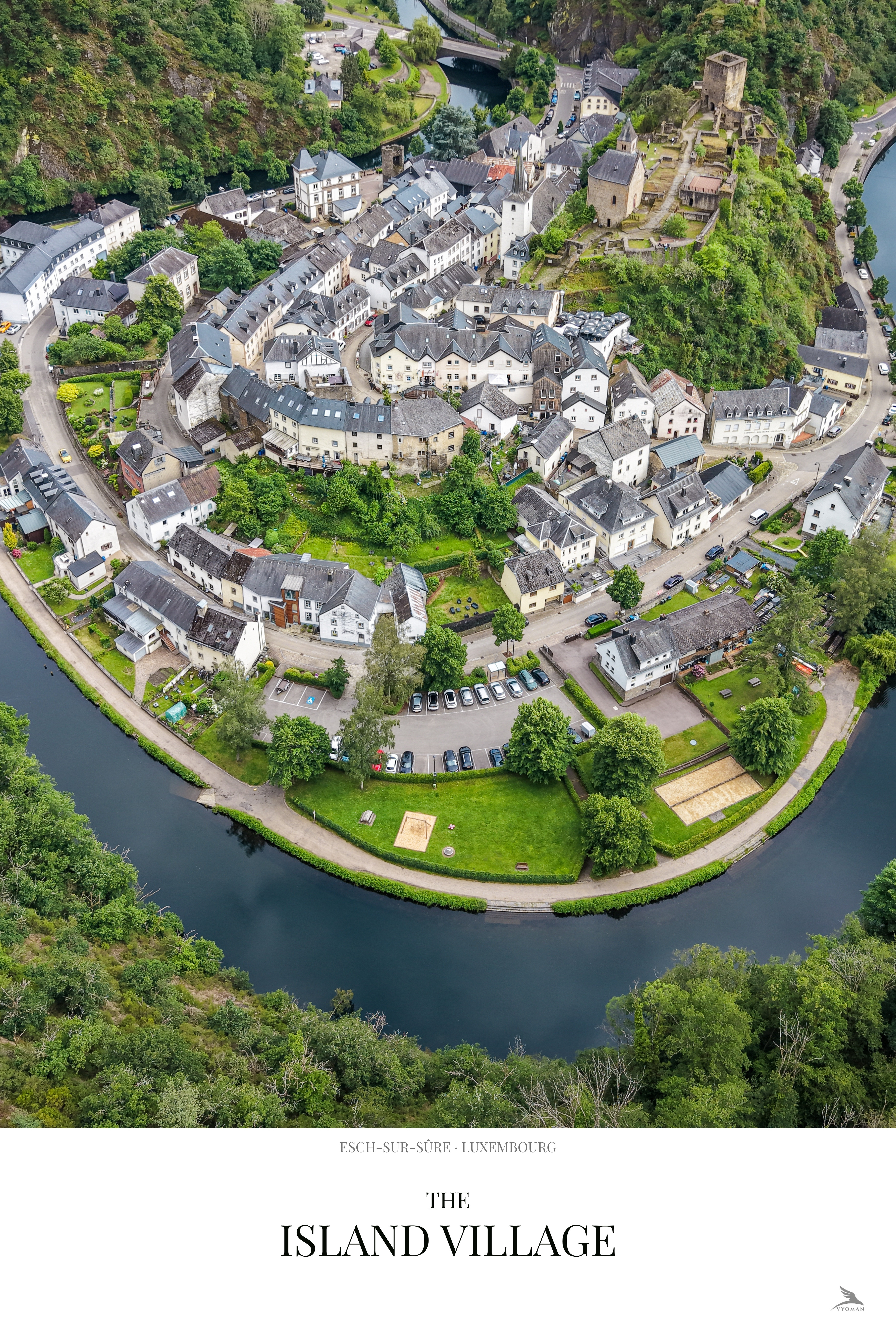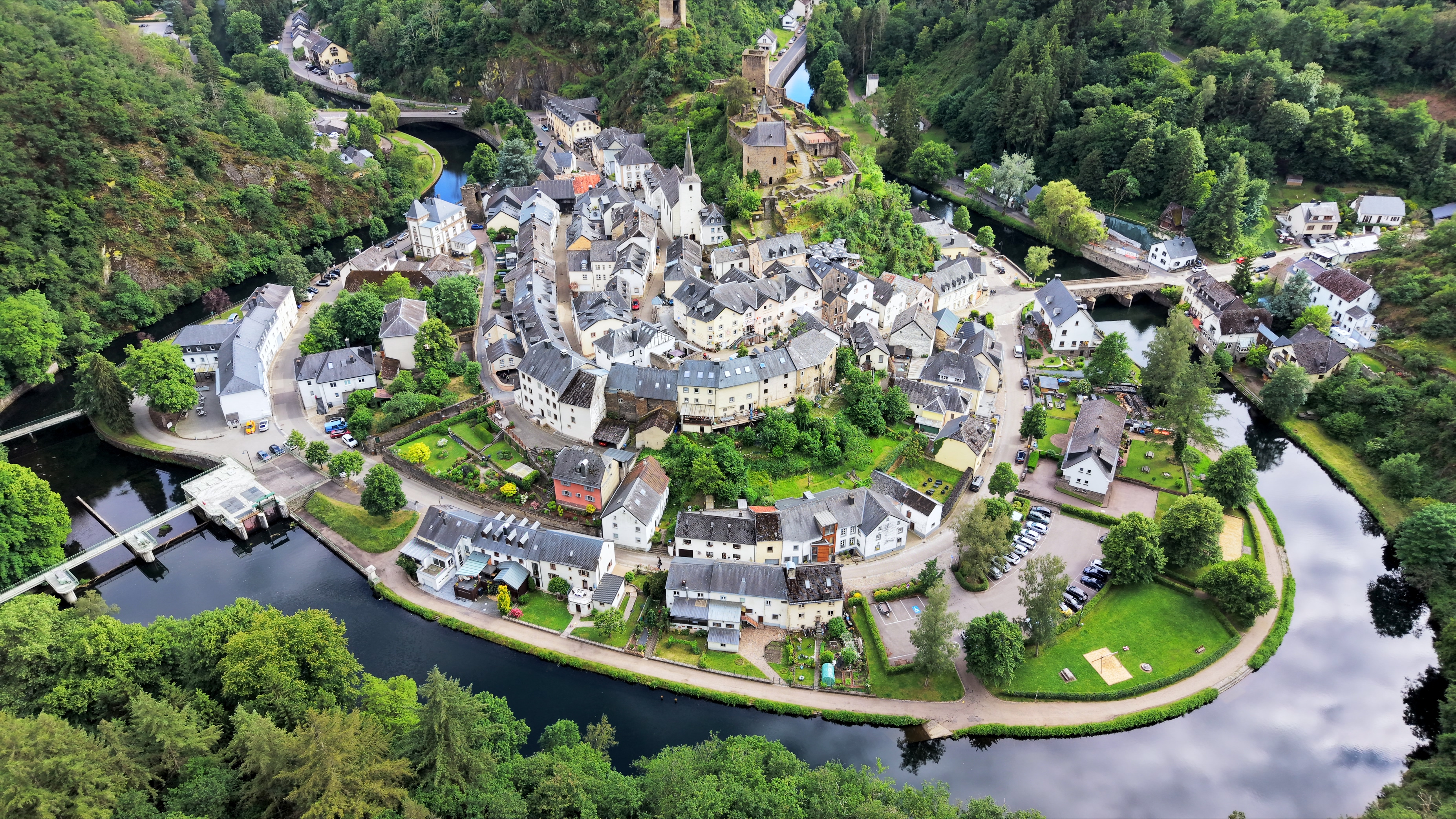
At Esch, the Sûre bends back on itself so completely that the village sits inside a near-perfect loop of water. Three sides enclosed. One road in. One road out. The geometry is invisible from the ground. From the air, the medieval village is clearly an island that forgot to cut the last cord.
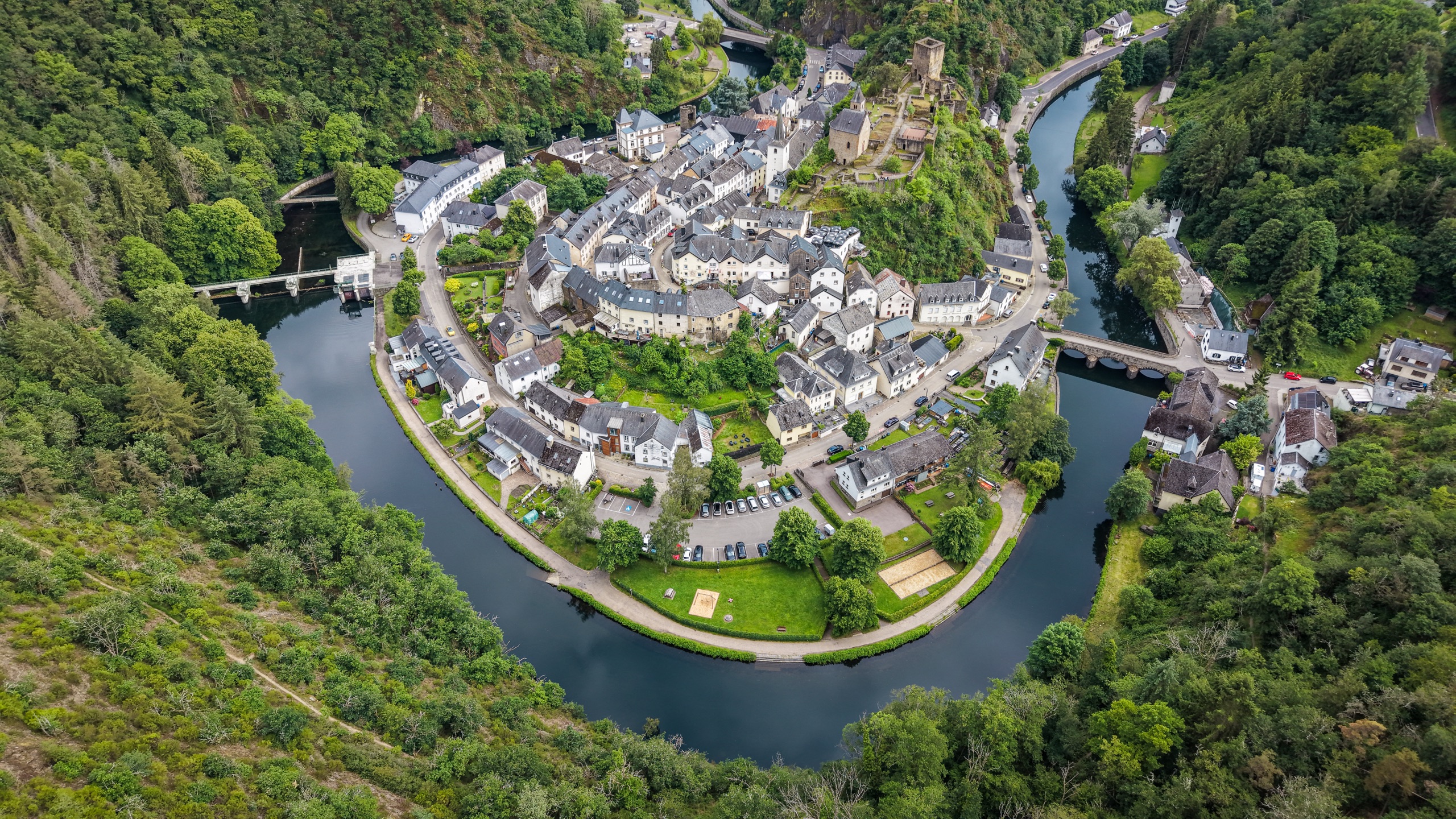
The village of Esch-sur-Sûre inside the river bend. Three sides enclosed by the Sûre. The geometry is obvious from altitude and invisible from the ground.
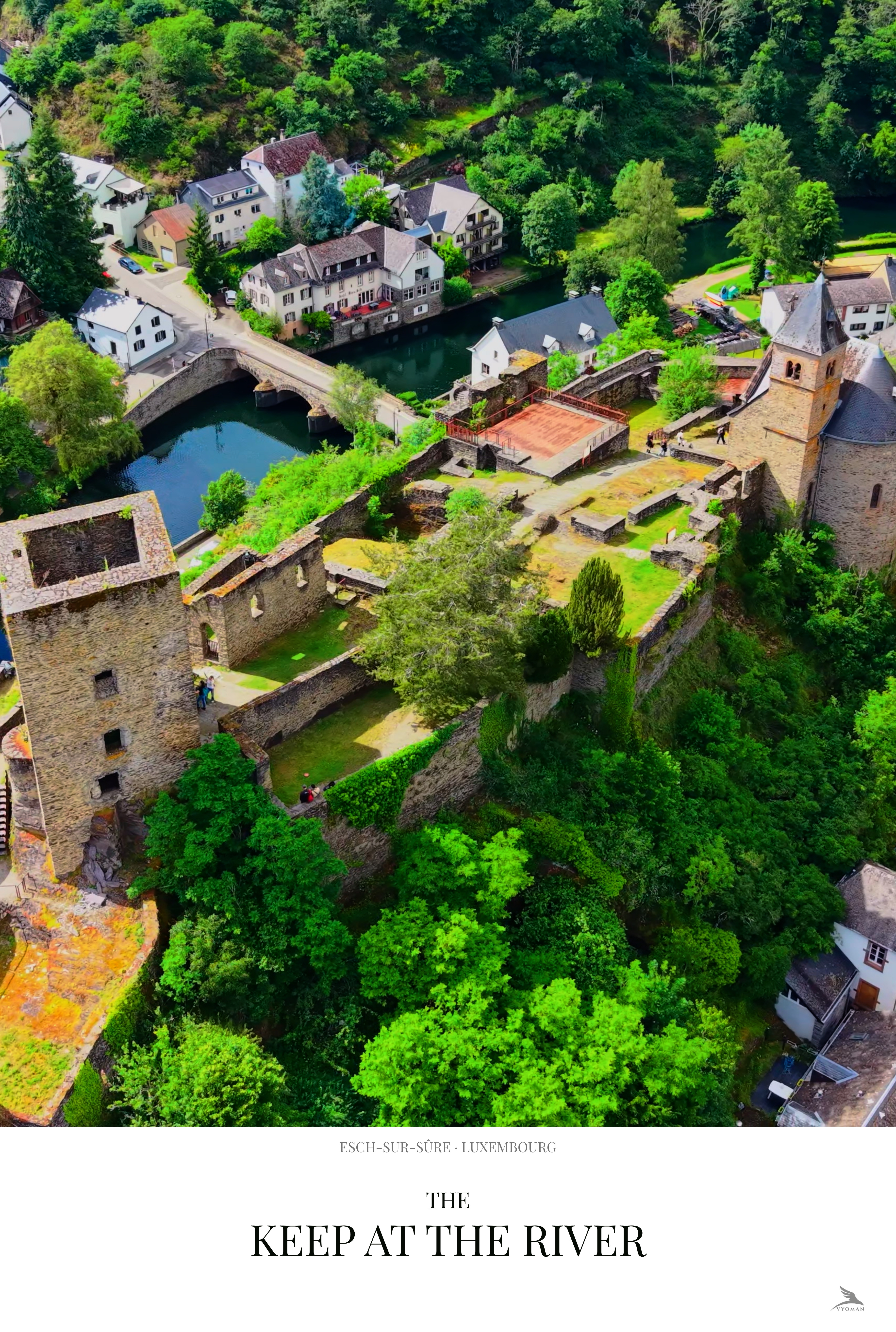
PrintThe keep above the village dates to the twelfth century. The lords of Esch-sur-Sûre held the valley from this rock for three centuries before the castle fell derelict. What remains — one watchtower, a section of curtain wall, the roofless chapel — sits sixty metres above the river on a sandstone bluff too steep to build on. The village grew in its shadow and is now better visited than the ruin that made it strategically worth founding.
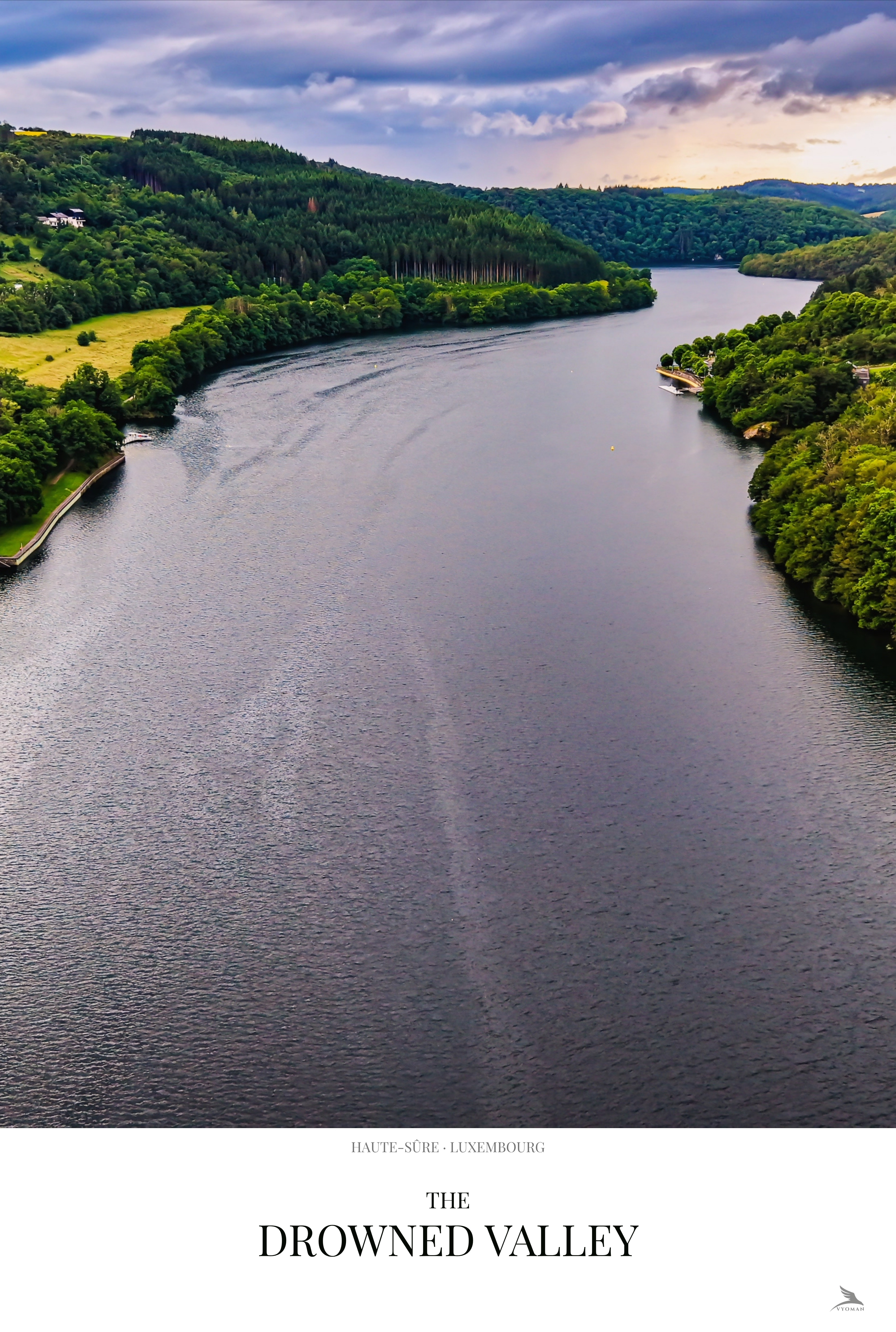
The Upper Sûre lake is not a natural feature. Between 1955 and 1961, a dam was built across the river above Esch-sur-Sûre to supply drinking water to the south of the country. The reservoir created at its completion holds sixty million cubic metres — the largest body of fresh water in Luxembourg. The valley it replaced, the farms and roads and hamlets now thirty metres below the surface, was flooded within living memory of people still alive when these frames were made.
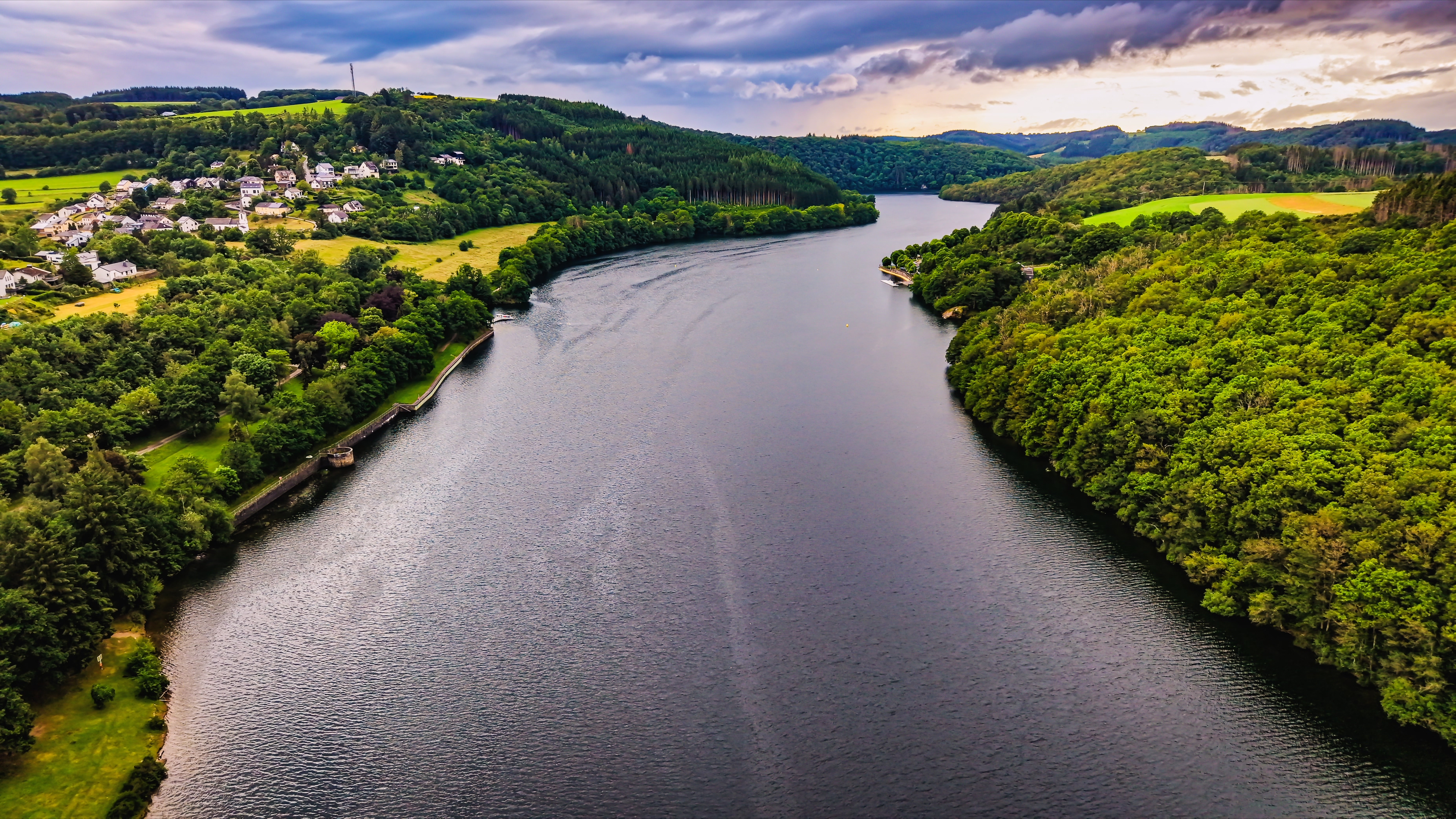
The Upper Sûre reservoir above the dam. The valley it replaced — farms, roads, hamlets — was flooded within living memory. Sixty million cubic metres of fresh water now.
Print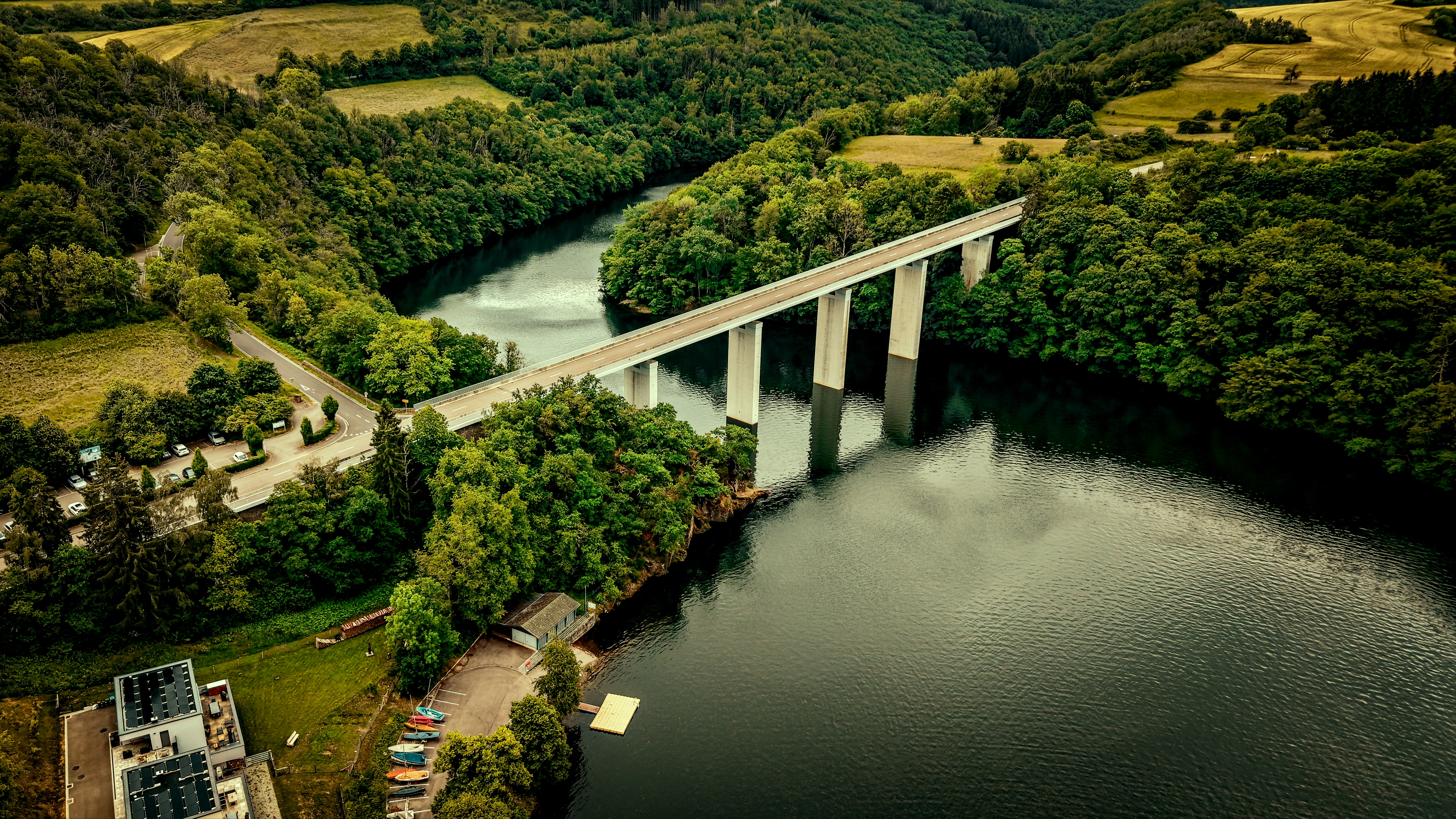
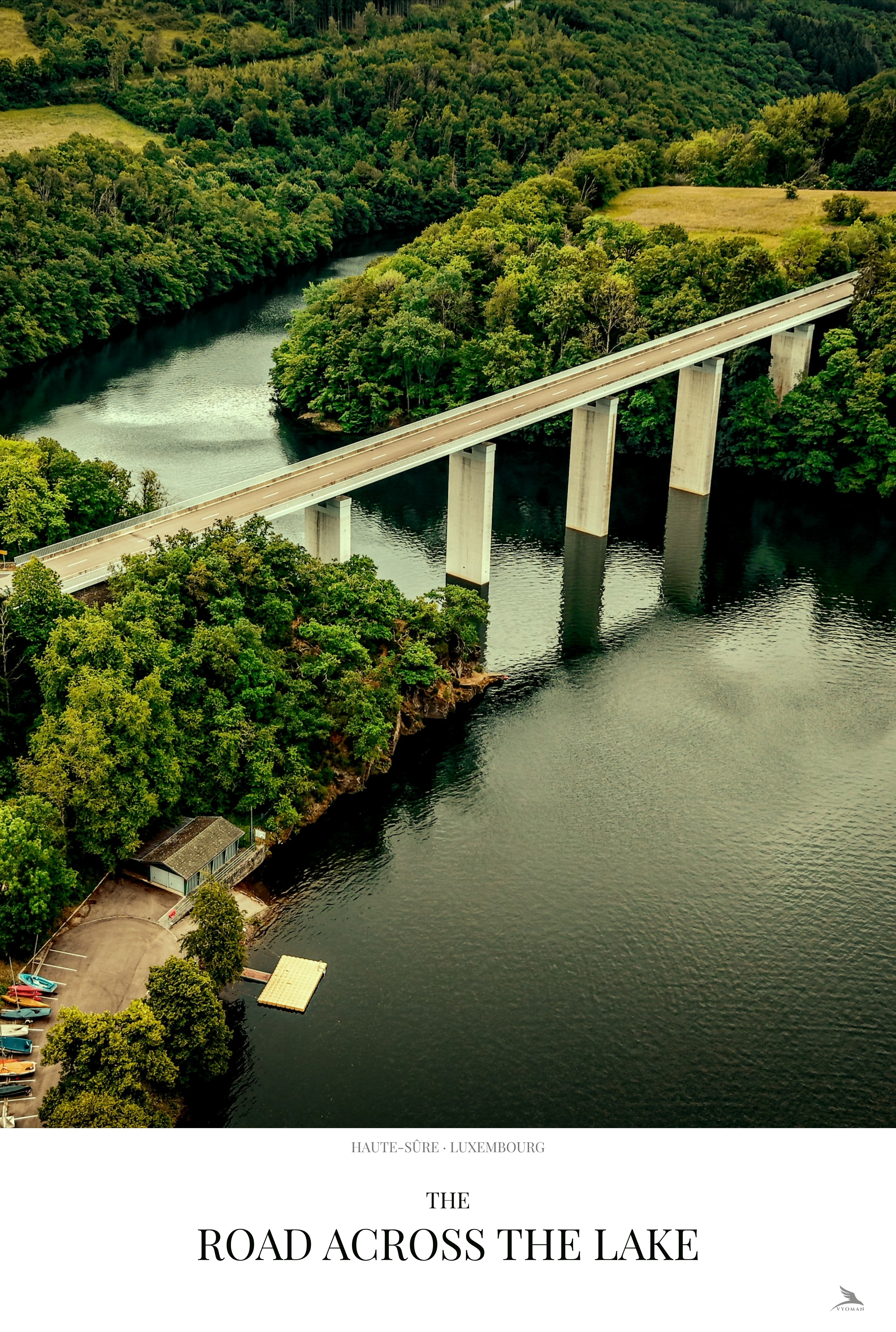
The road viaduct above the reservoir. Roads in Luxembourg often solve geography this way — quietly, and at some scale.
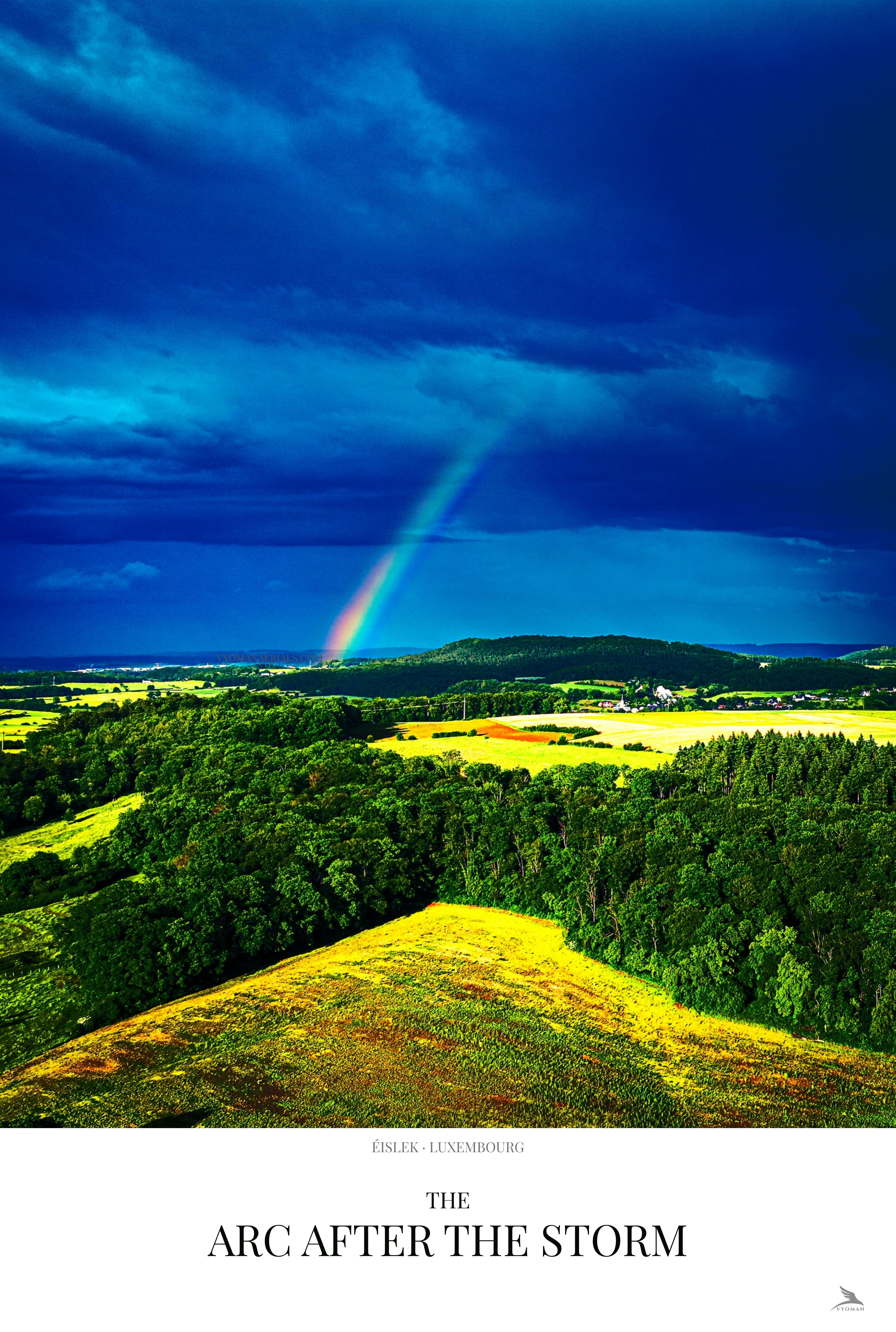
PrintThe storm crossed from the west. The rain moved through quickly, trailing that flat strange light that comes in the hour after a weather system passes — gray at altitude, orange at the horizon. The rainbow stood over the Éislek plateau for four minutes. Then it was gone. The hills were still wet.
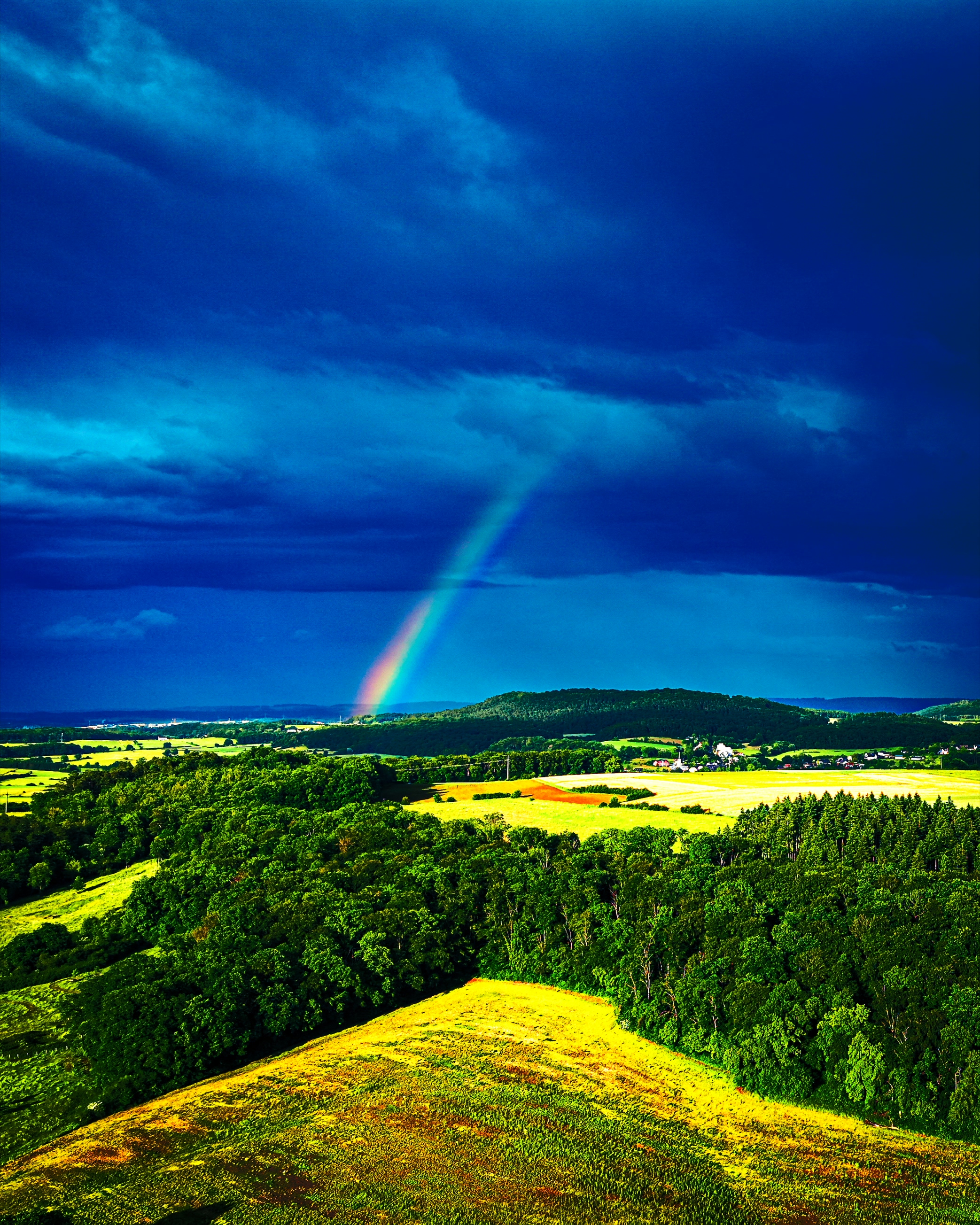
The rainbow over the Éislek. It lasted four minutes. The hills were still wet when it went.
Print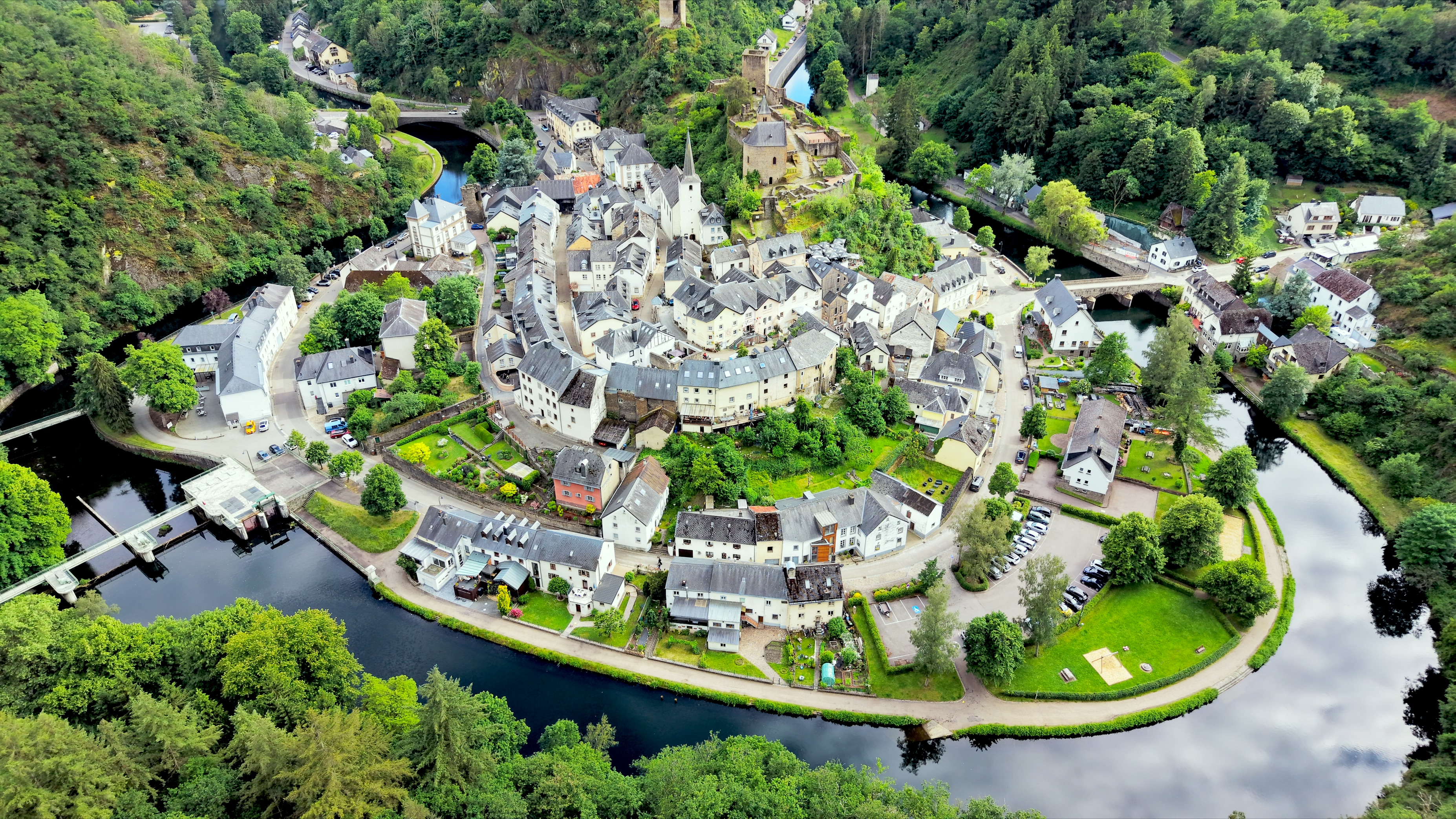
The village from the side, the river loop and the castle tower both visible at once. The keep sits sixty metres above on a sandstone bluff too steep to build on. The village grew in its shadow.
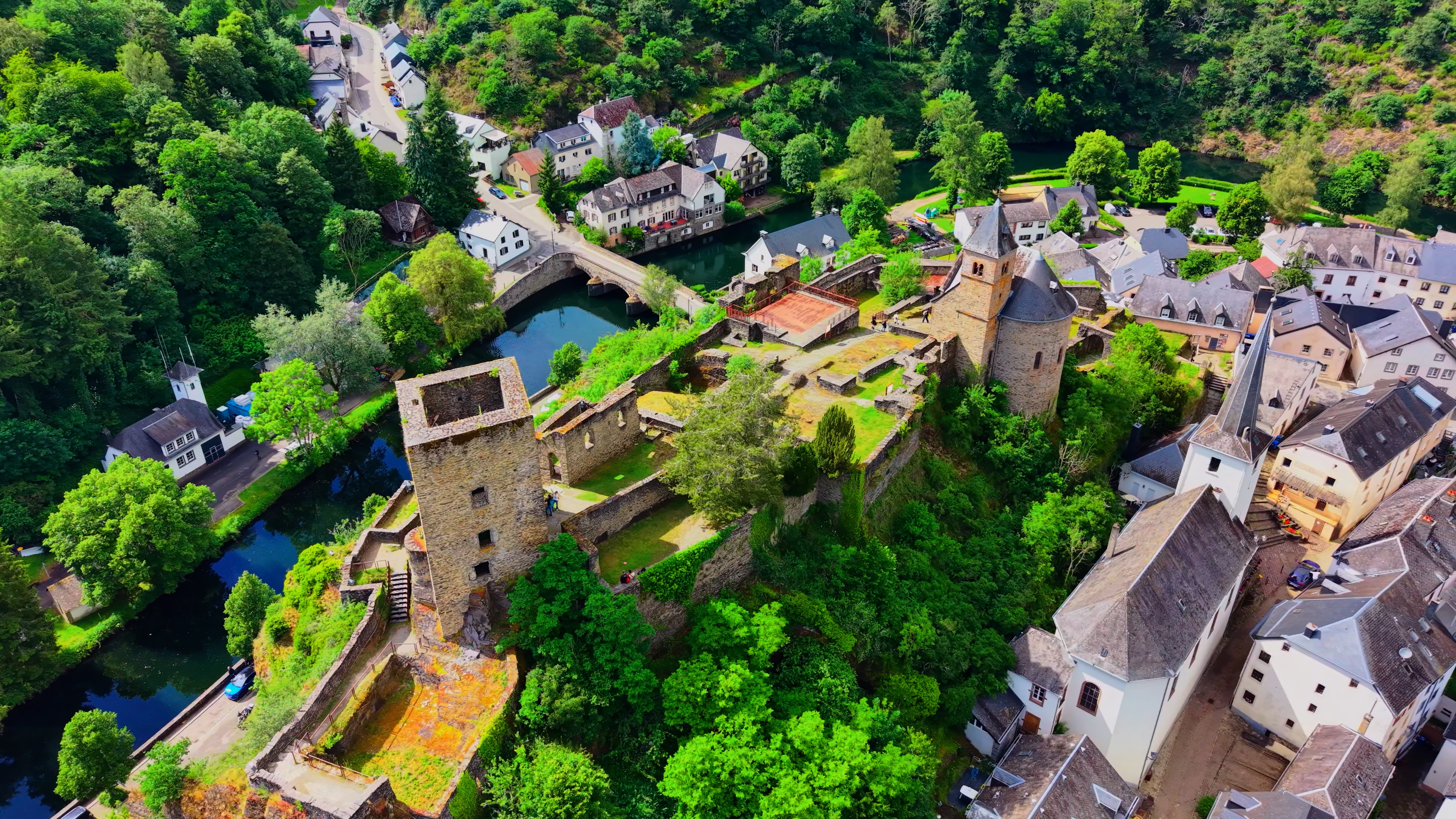
The twelfth-century keep from low altitude. The curtain wall, the watchtower, the roofless chapel — and below it, the village and the river it commanded. Three centuries of holding this valley, then a gradual abandonment the forest accepted on its own terms.
Print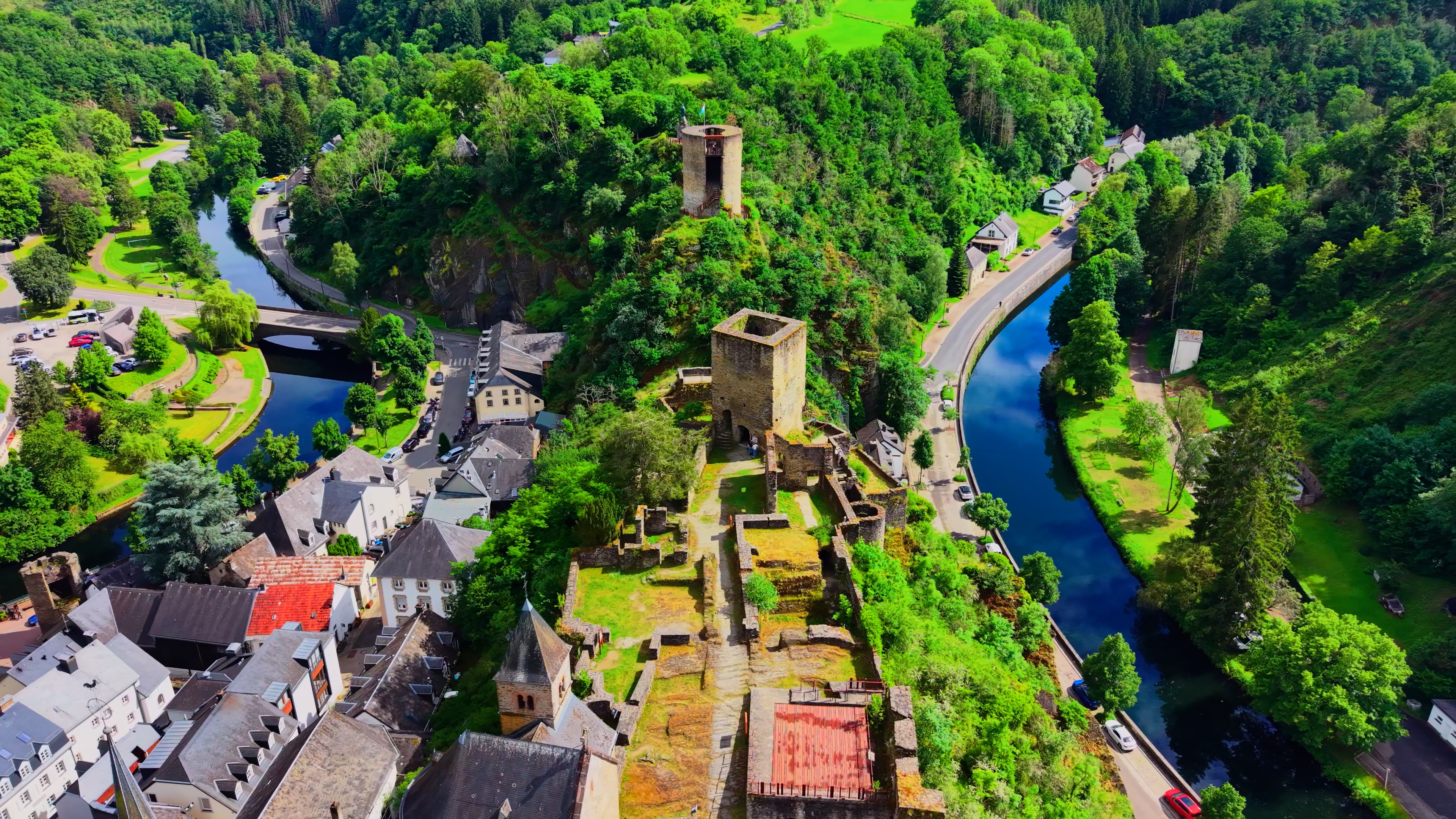
The full castle precinct from altitude — curtain wall, keep, and the Sûre running below on three sides. The village grew up between the bluff and the river, in the only space that was available.
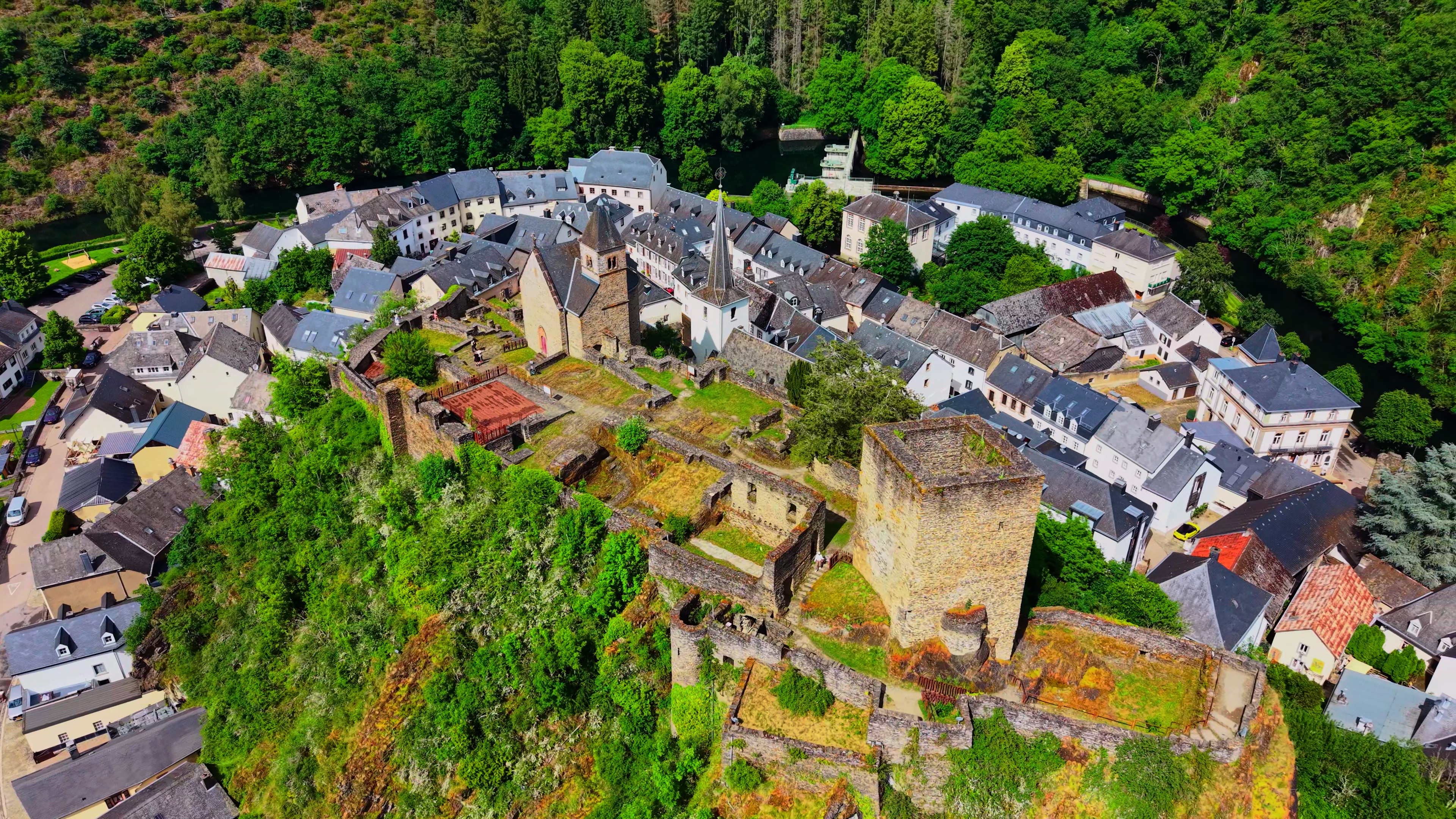
The keep from the western approach, the village and church rising immediately behind it. Everything built here was built in the castle's shadow. The shadow was the point.
From the collection