Southern Luxembourg's soil is red. The iron-rich Jurassic sediment the geologists call minette — tiny spherical grains, each a relic of a shallow coastal sea that covered this land one hundred and eighty million years ago — sits close enough to the surface that the earth turns ochre in ploughed fields and rust-orange along stream beds. For a century, that ore was the entire economy. Then the last blast furnace went cold in 1981, and the forest moved in.
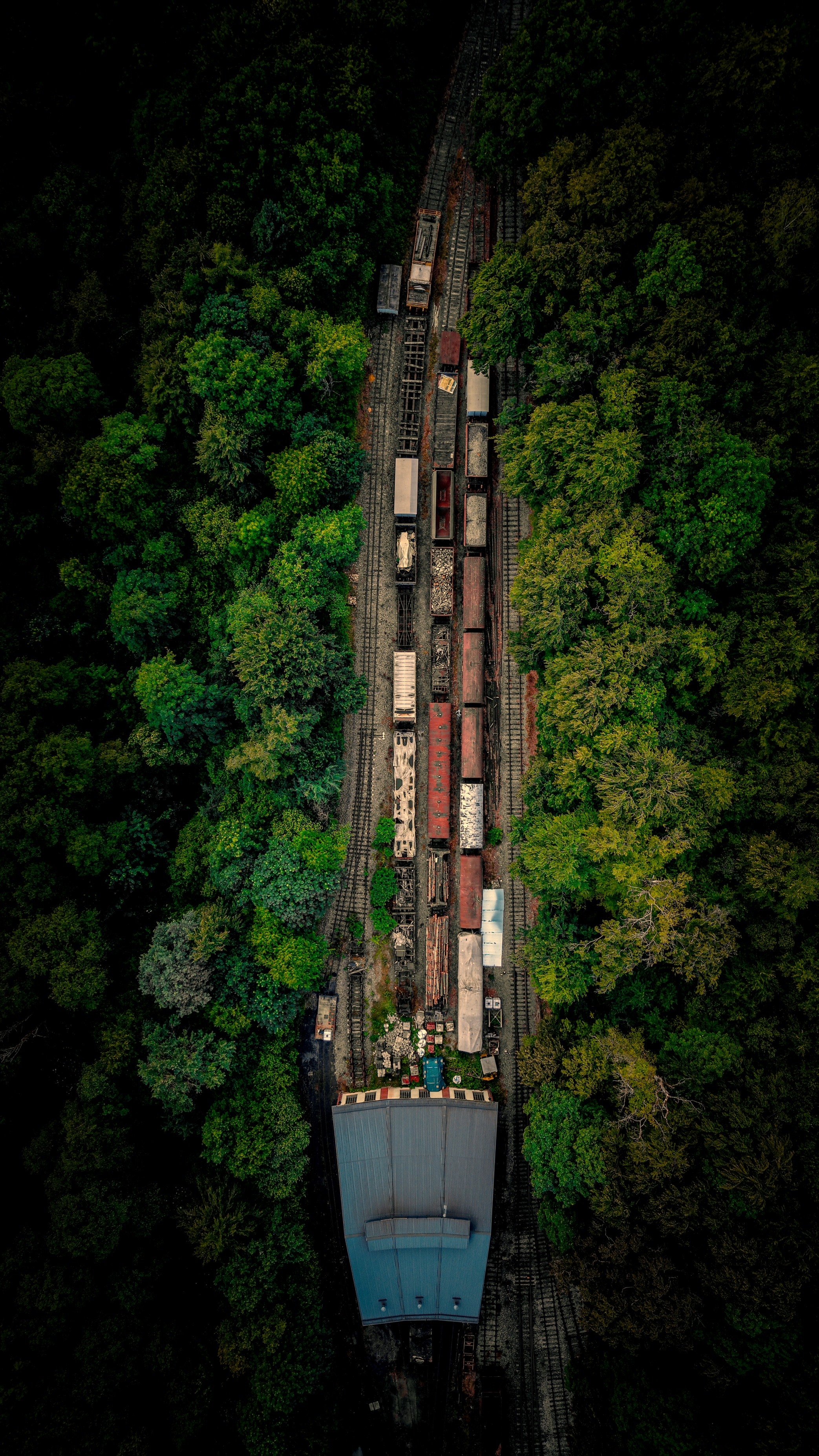
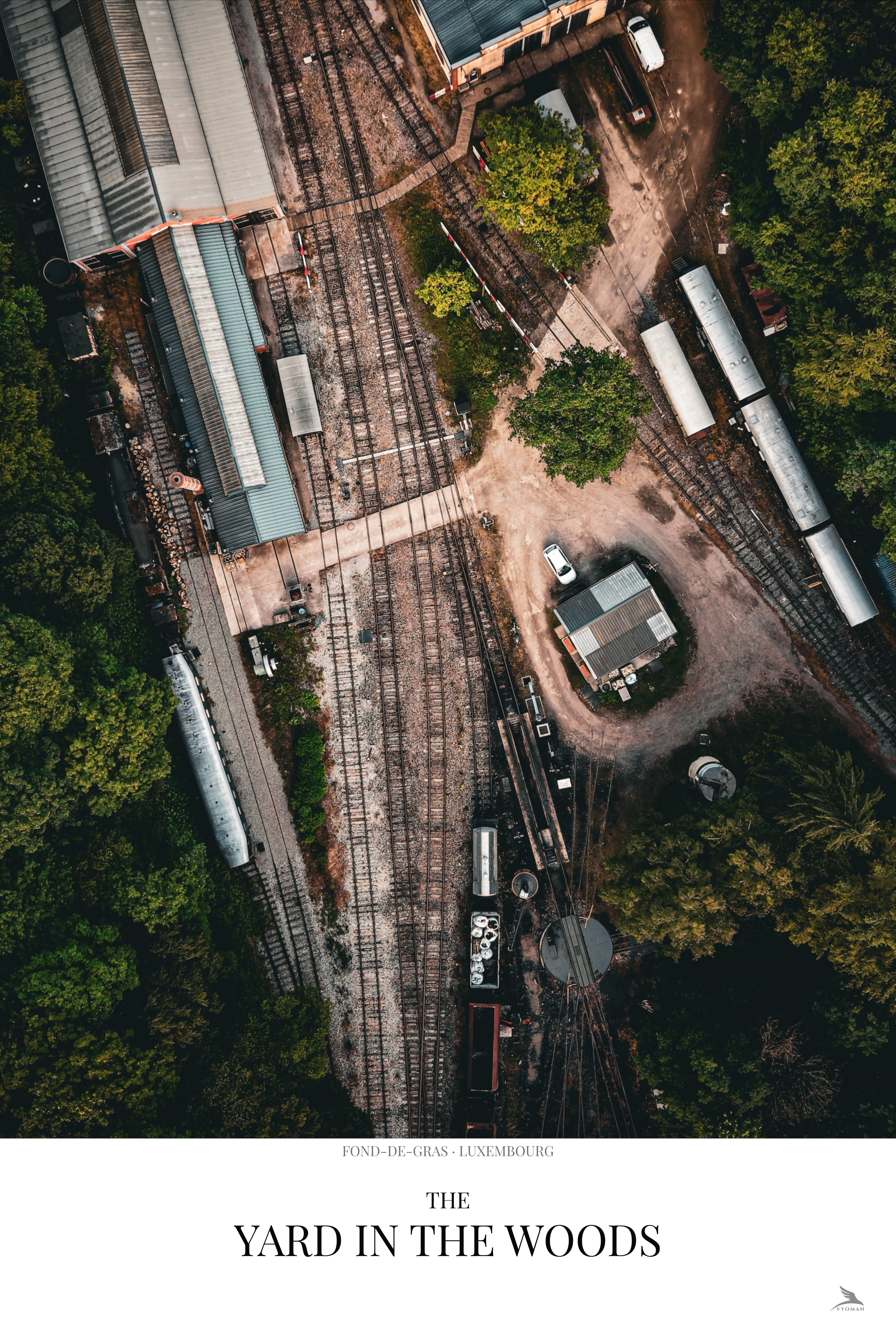
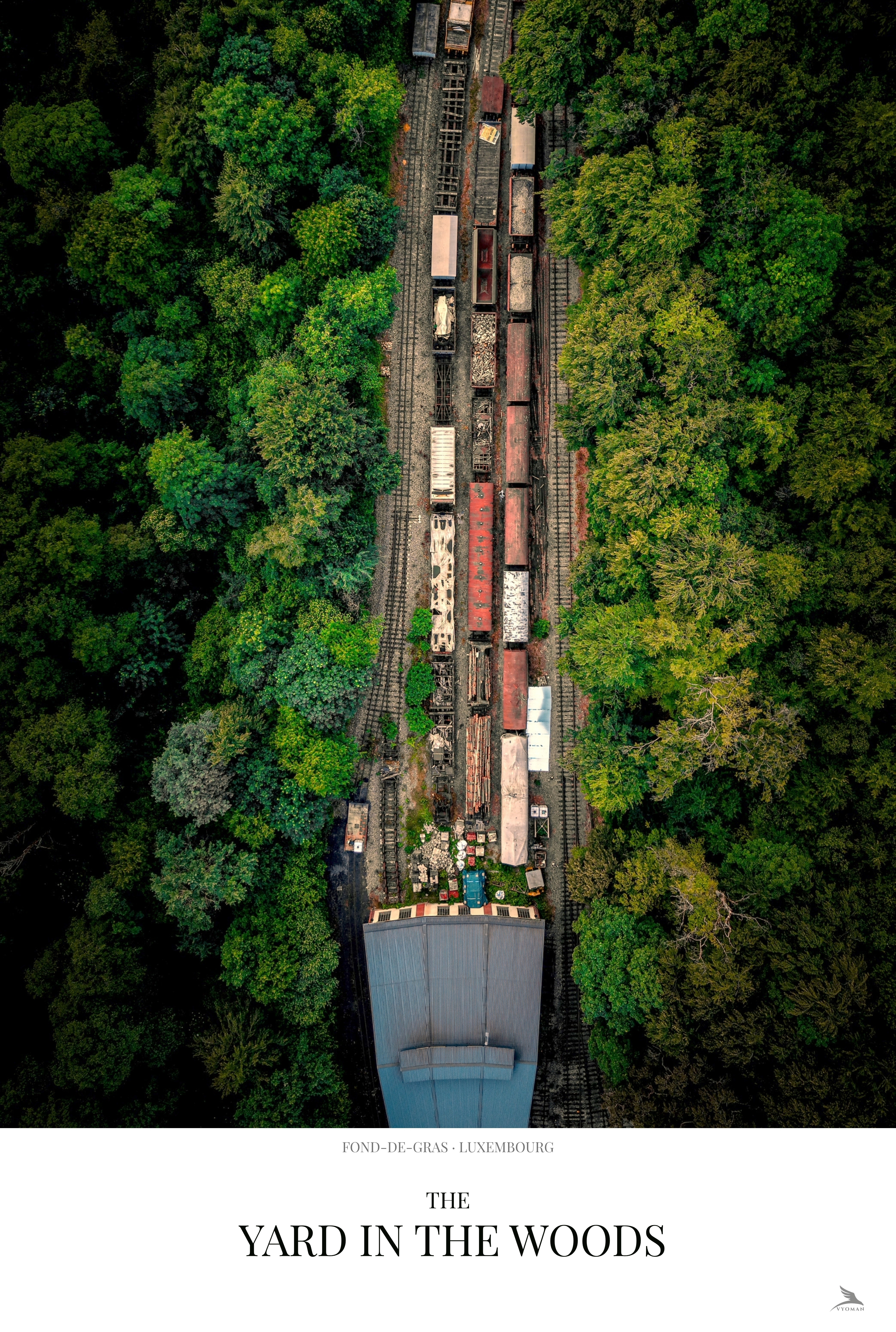
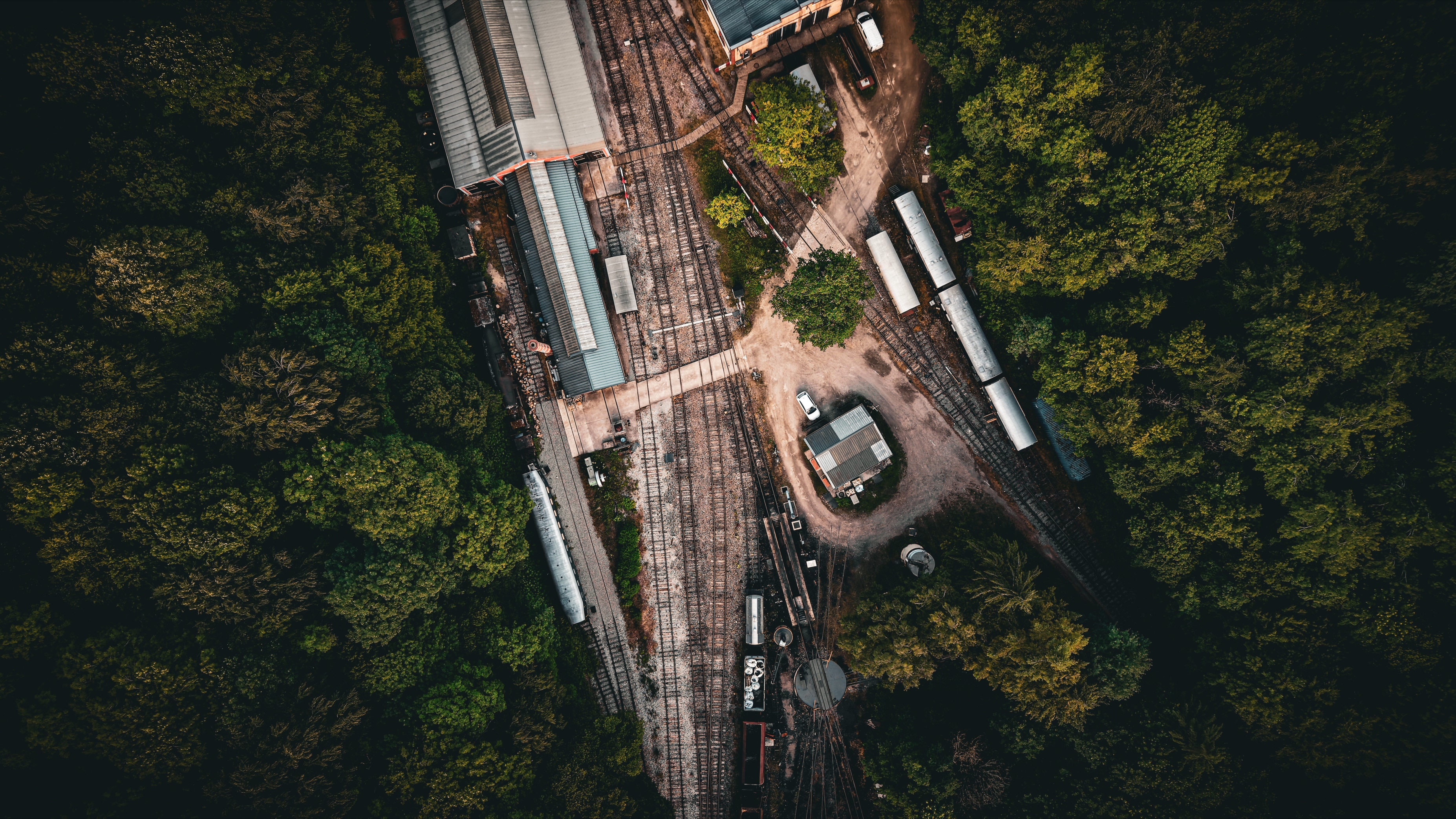
The Lok Werkstatt from directly above. Heritage wagons on parallel tracks — a ribbon of iron held open in the canopy. The forest has been closing the margins for forty years.
PrintThe railway at Fond-de-Gras dates to 1874. The Prince Henri Railway and Mining Company built the line to haul ore out of the surrounding pits, and the Lok Werkstatt — the locomotive workshop at the heart of the yard — kept those engines running for nearly a century. Preserved now as the anchor of Minett Park, the depot holds a dozen steam and diesel locomotives on tracks that once ran directly to the mine faces. The Train 1900 heritage service still runs the same 25-minute journey the miners took to work each morning. From altitude, the yard barely registers: a thin corridor of heritage wagons and rusting iron, a seam barely visible in the canopy that presses in from every side.
De Minnet — Luxembourg's only UNESCO Biosphere Reserve, designated on 28 October 2020 — is not a wilderness. It holds a third of the country's entire population inside its boundaries, across towns built wholly around smelting, shipping, and ore. Esch-sur-Alzette, Differdange, Dudelange. The decommissioned blast furnaces at Belval still stand, lit at night as a cultural monument. The UNESCO designation was drawn precisely around this coexistence: industrial consequence and ecological recovery occupying the same frame, at the same time, on purpose.
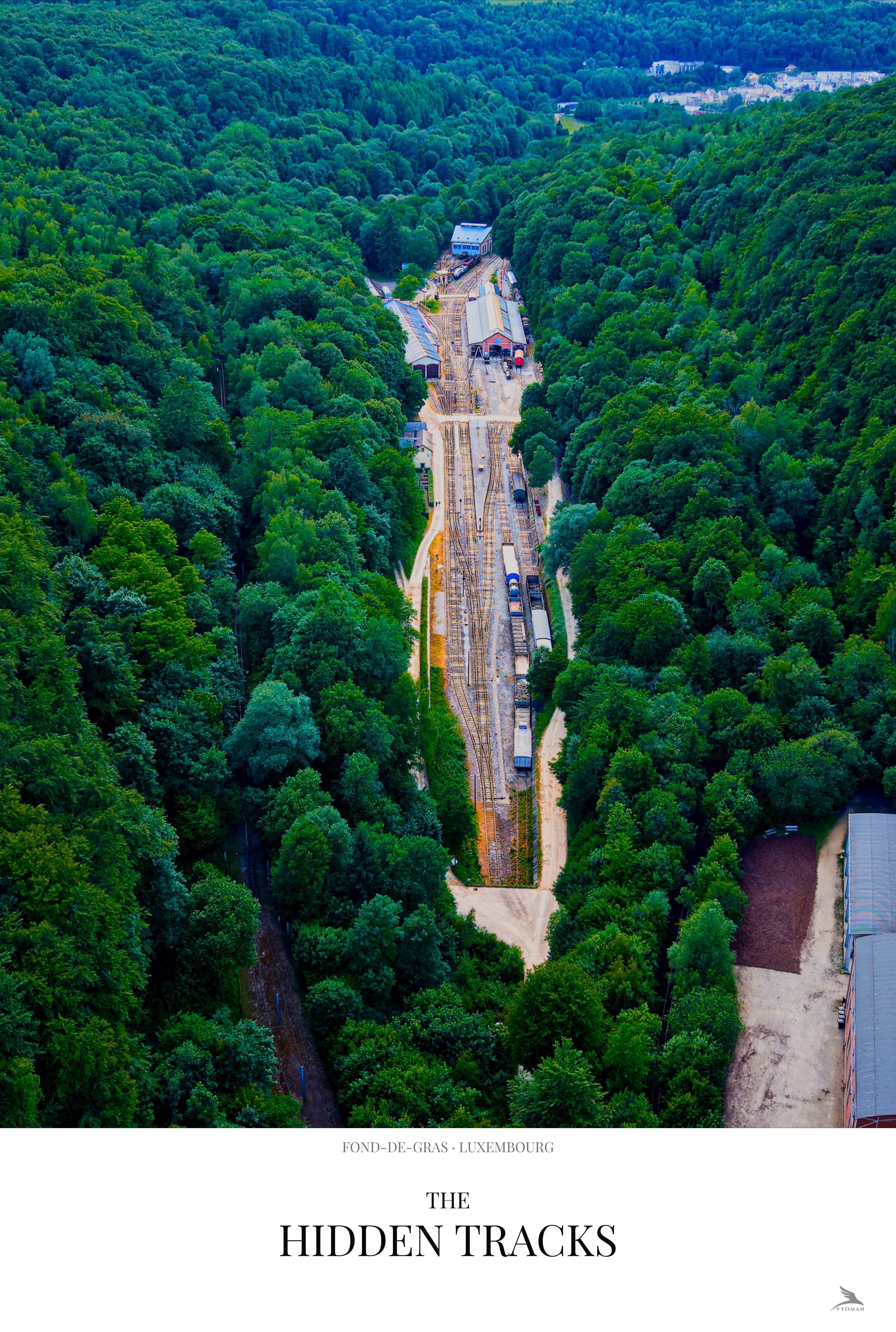
The full yard at altitude. The depot, the locomotive shed, the sidings — all of it a thin seam of industrial heritage inside a forest that won.
Print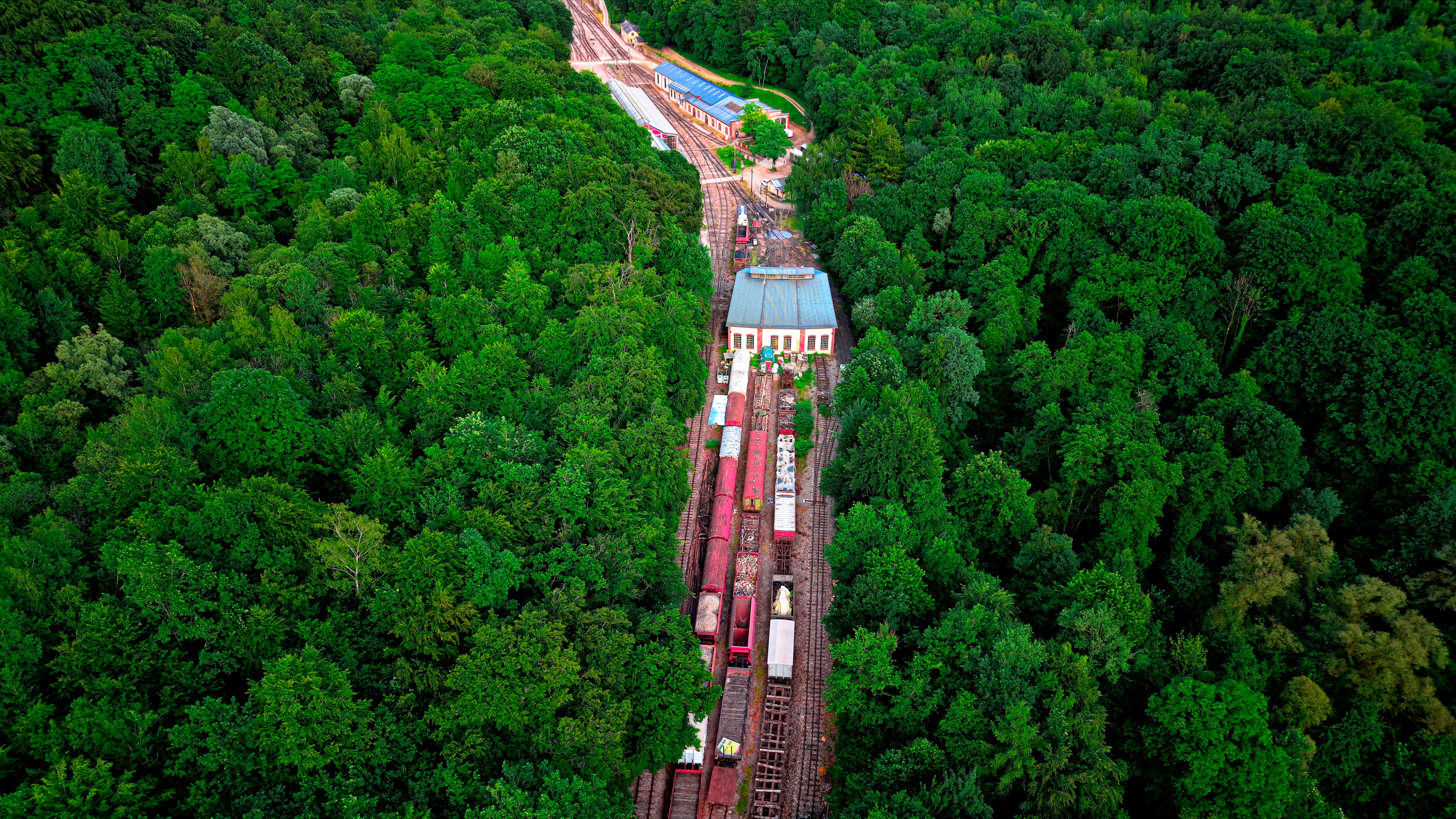
The yard from the side, with altitude. The vivid green of the Minett canopy presses in from both directions. The colored wagons are the only thing that makes the yard legible from here.
The dead pines standing among the living are not disease. They are the slow legacy of acid rain from the furnace decades, working its way out of the ecosystem at its own pace. The open-cast pits have become bat wintering colonies — the same tunnels dug to extract ore now shelter one of Luxembourg's largest bat populations, abandoned and colonized without any human intervention. The Giele Botter, named for the ochre color of its exposed ore face — 'yellow butter' in Luxembourgish — is now a hundred-hectare nature reserve. Three economies — Iron Age, industrial, ecological — are stacked in the same valley, each one brief in its own way.
The Film
Fond-de-Gras — The Yard in the Woods
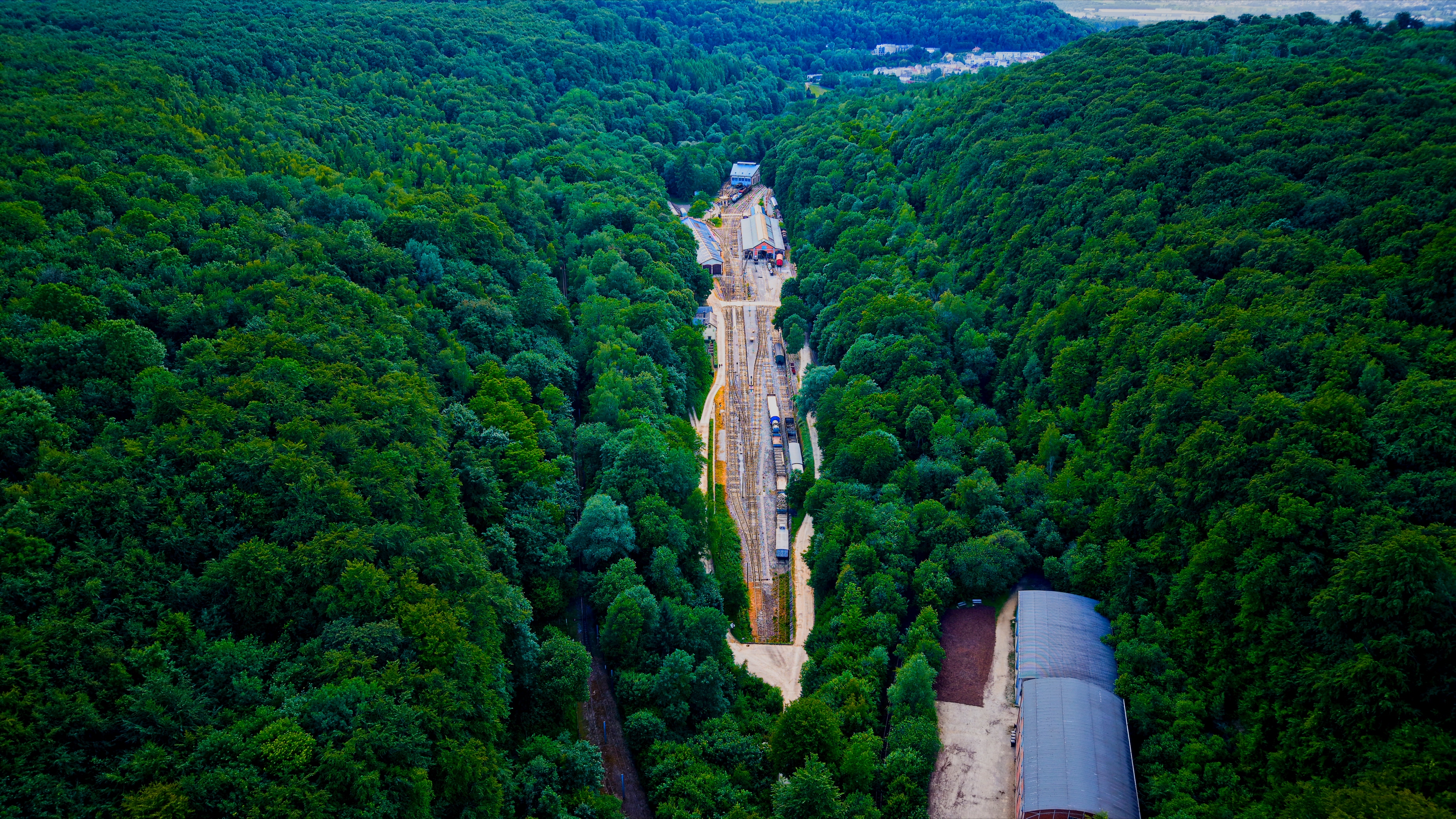
From higher altitude the yard almost disappears. A thin corridor of activity inside the forest, the shed roof the only hard edge visible in the canopy.
Print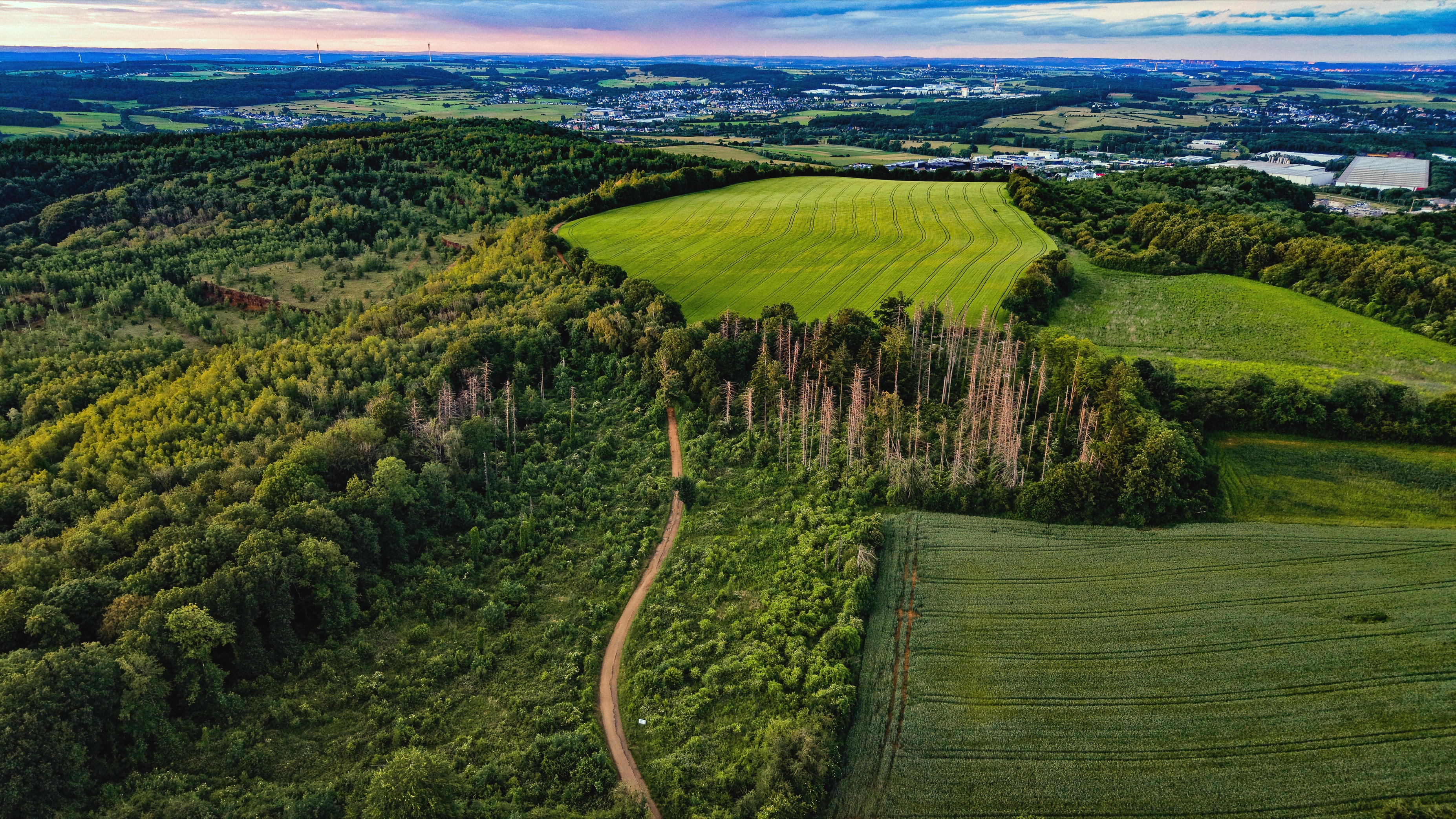
The edge of the Minett biosphere at dusk. The dead pines standing among the living are the slow legacy of acid rain from the furnace decades, working out at their own pace.
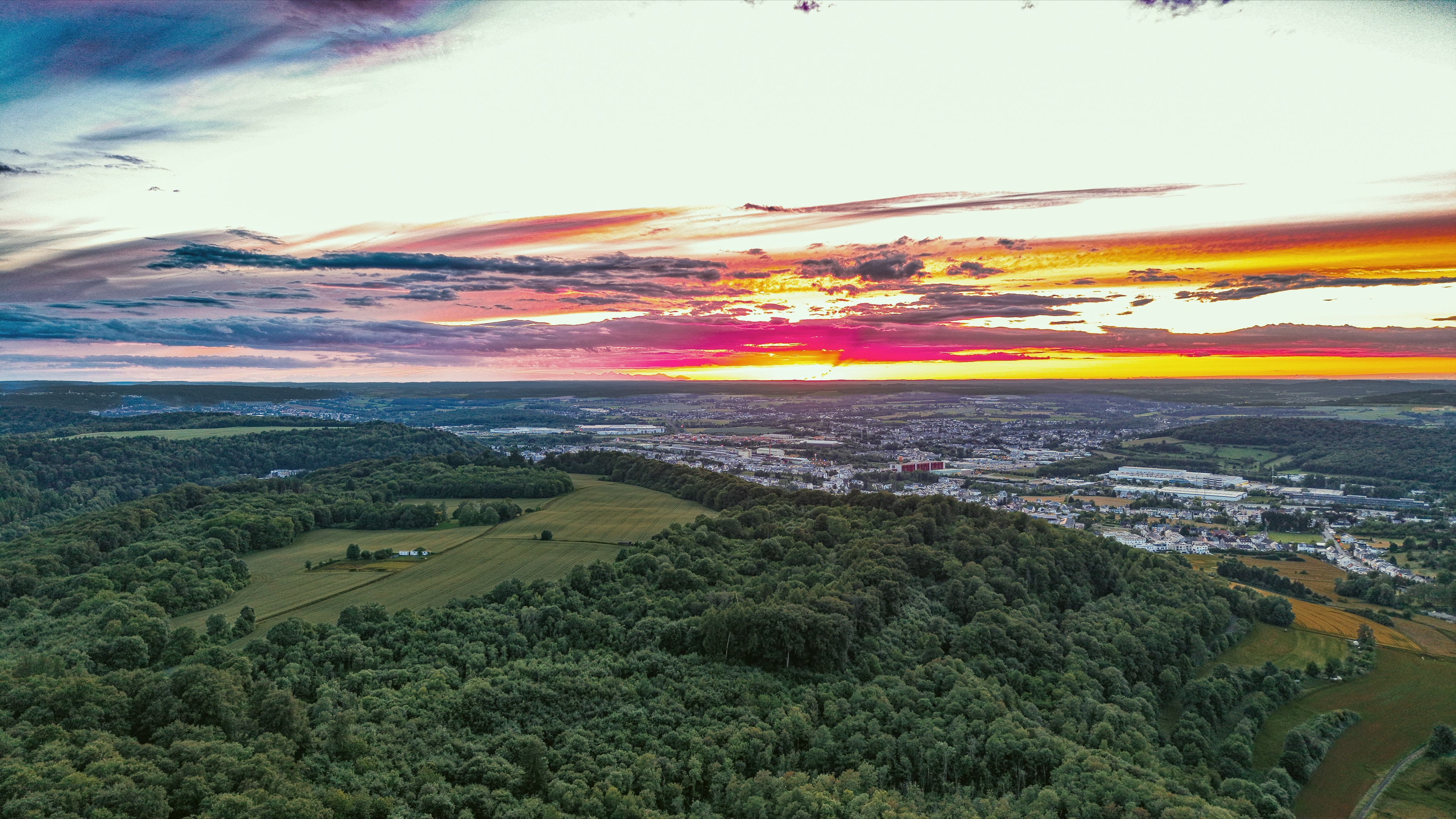
The Minett sky at the end of the evening. Orange, red, violet — the same iron-stained palette as the soil six hundred metres below.
From the collection